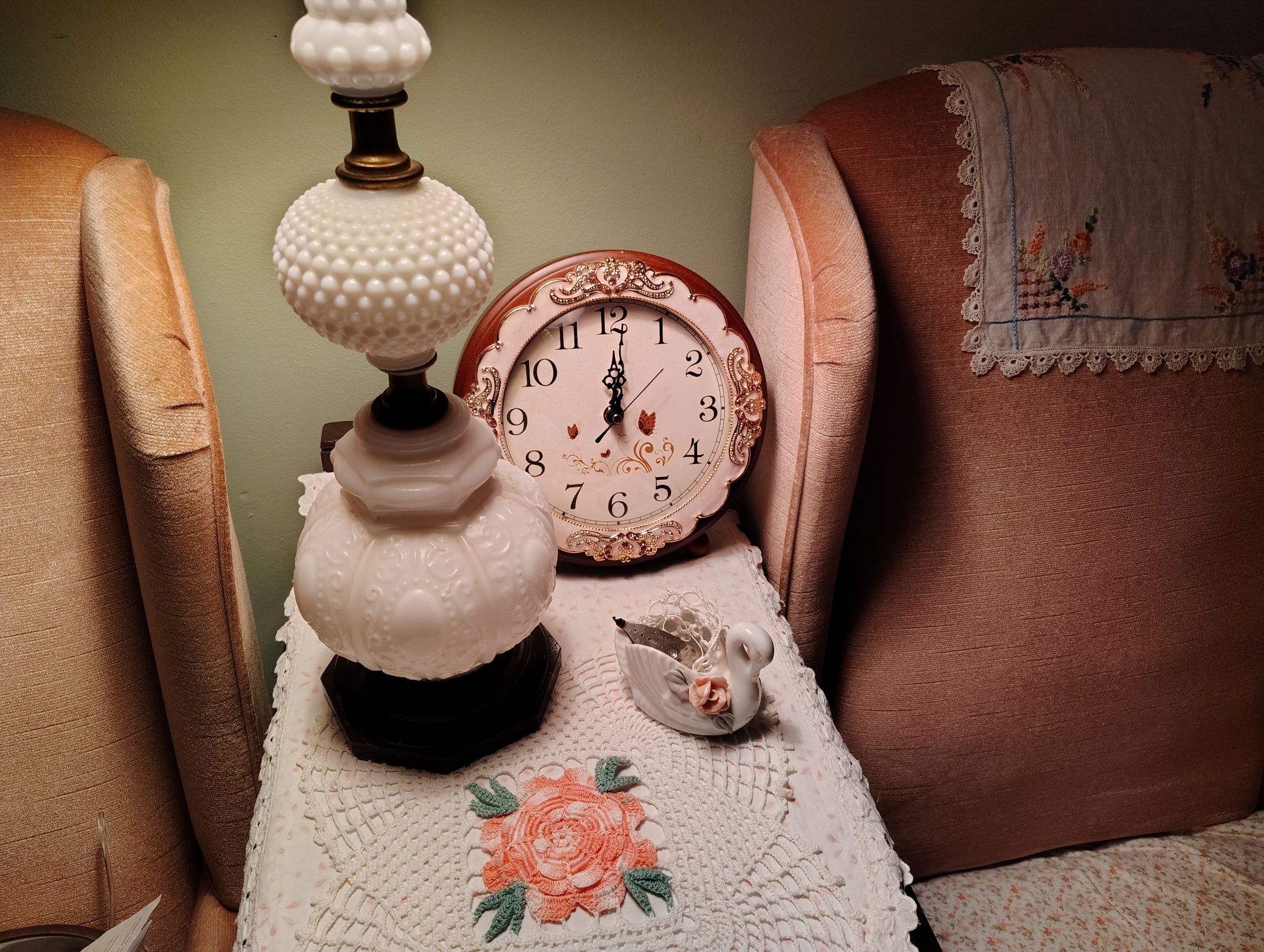
With the ticking of the second hand on the clock we slip right into a New Year! The year 2026/1942. As I am posting this some of you are already in the new year and some of us are still in New Years Eve but we will all be there soon.

Once again we go down that road to living like the past.
It is up to us what we learn this year of 1942, and I hope we find some helpful and interesting facts that we can apply to our life and share with others.
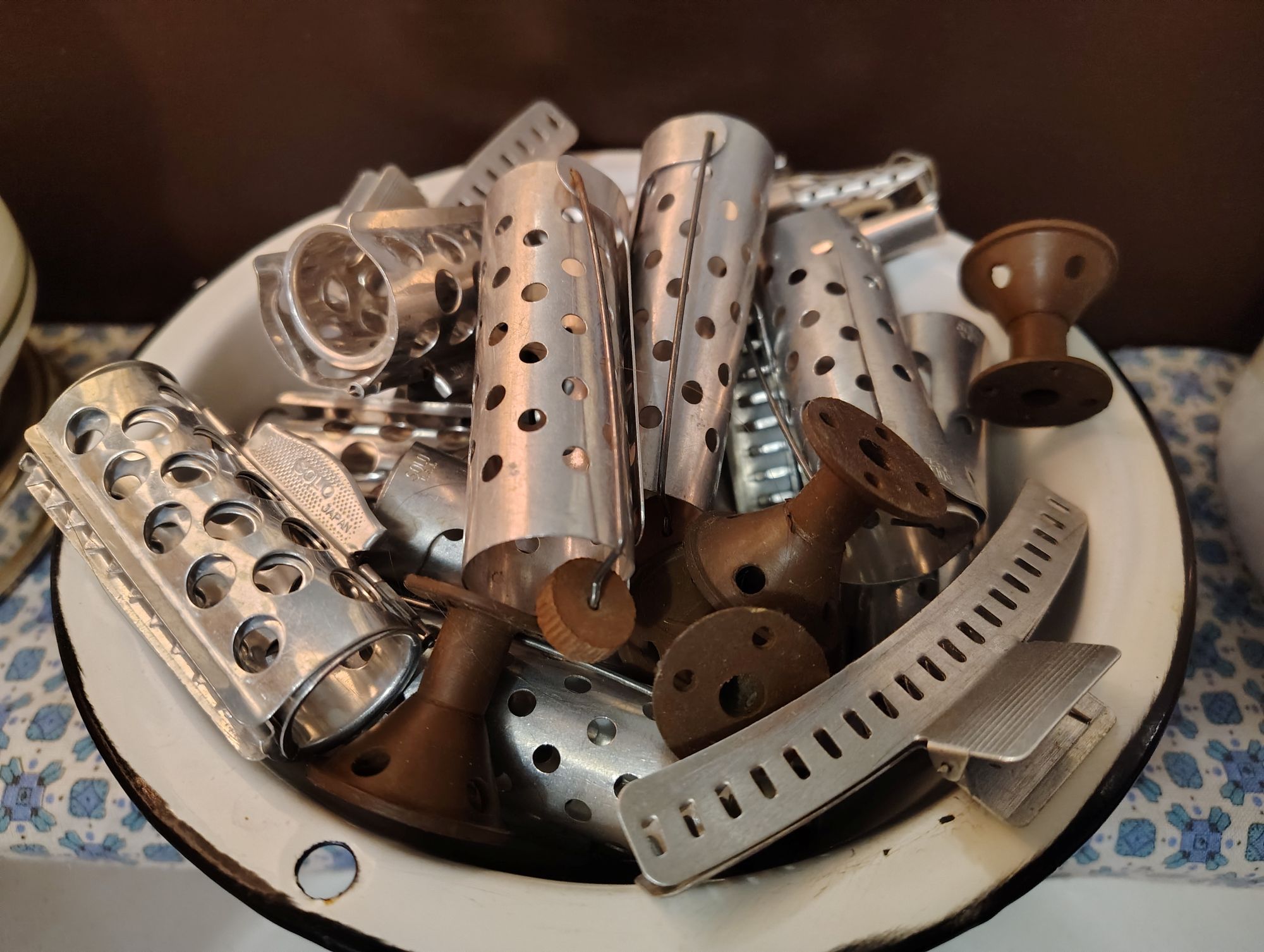
It is an interesting year of a merge of very old furnishings with a few new pieces. Many people have not recovered from the great depression, however more people have electricity and running water, the electric refrigerator is starting to replace the ice box which actually was called a refrigerator. Some have afforded new clothing.
The magazines make it look more modern than it really is. The radio has become very popular with soap operas, mystery radio show, and big band swing music programs.

During ww2 my father worked as an instructor and in recreation and moral. My father was a musician from childhood throughout his entire life. He played many instruments, piano, clarinet, sax, drums. Most any instrument he put in his hands he could play. My childhood life was quite interesting to say the least. :)

Dad did some acting during the 1940s and 1950s, but he did not seek out acting these things seemed to come to my father. On his 1940s military records it is listed that he is an entertainer and musician. Besides his music, he worked in the furniture business.
There were many changes in my lifetime, I spent a lot of time visiting and spending summers with my grandparents, aunts and uncles in Mississippi which I credit my knowledge of how to do things the old way.
After our house burned in Memphis, the stress was too much for my parents and they parted their ways and so my new journey took me to southeastern Alabama where I was thrusted back in time learning my ways of rural life in the deep south. These were the days of milking cows, shucking corn, shelling peas and butter beans.
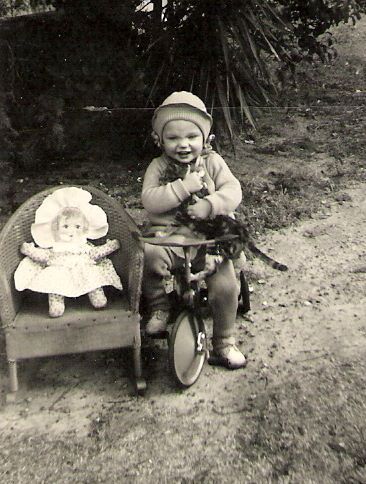
The early 1940s was as modern as where one lived. If you lived in the city then more was available, if you lived in a small town or rural, you might not have electricity or running water. There was no way to say, this is how they did things. However in 1942 many things we have today were not yet invented or on the market. Some things were invented long ago that never made it to market and some things invented were years before they made it to actually selling to the public.
We can get a general sense of how it was though from diaries, photos, history books, some magazines but magazines were more futuristic because they were promoting and marketing.
Some of my family were still without running water and electricity during the 1950s and 1960. I enjoyed pumping the hand pump to get water and always being reminded to leave water in the jar at the base of the pump for priming the pump. I remember toting water to the house and walking on the wood planks to the outhouse, absolutely my least favorite place.
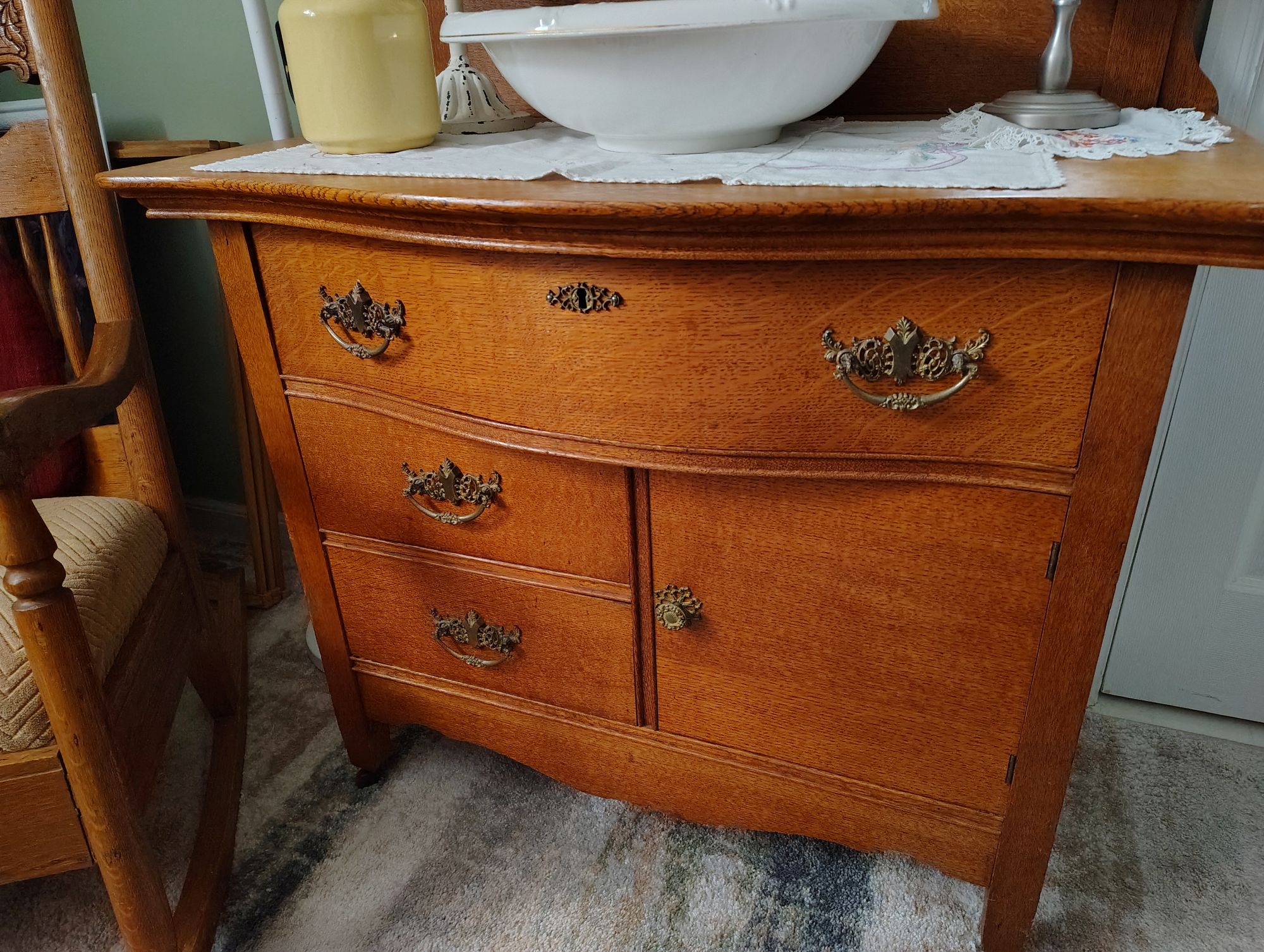
I still today use the washbowl to bathe between tub bathing.

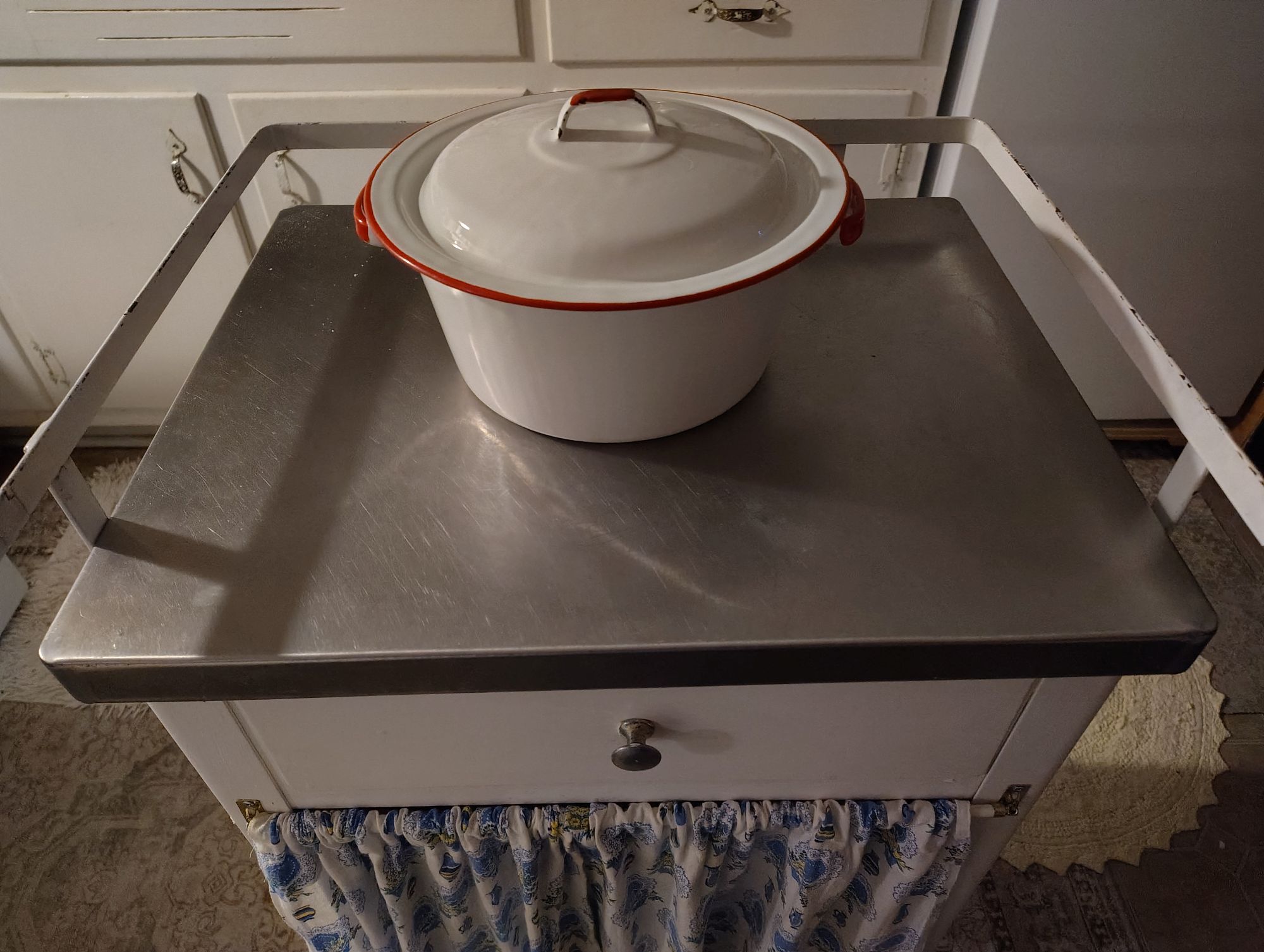
Many of the antique washbowl cabinets have a place to hold the slop pot or chamber pot. The slop pot is for carrying out the used water from the washbowl.
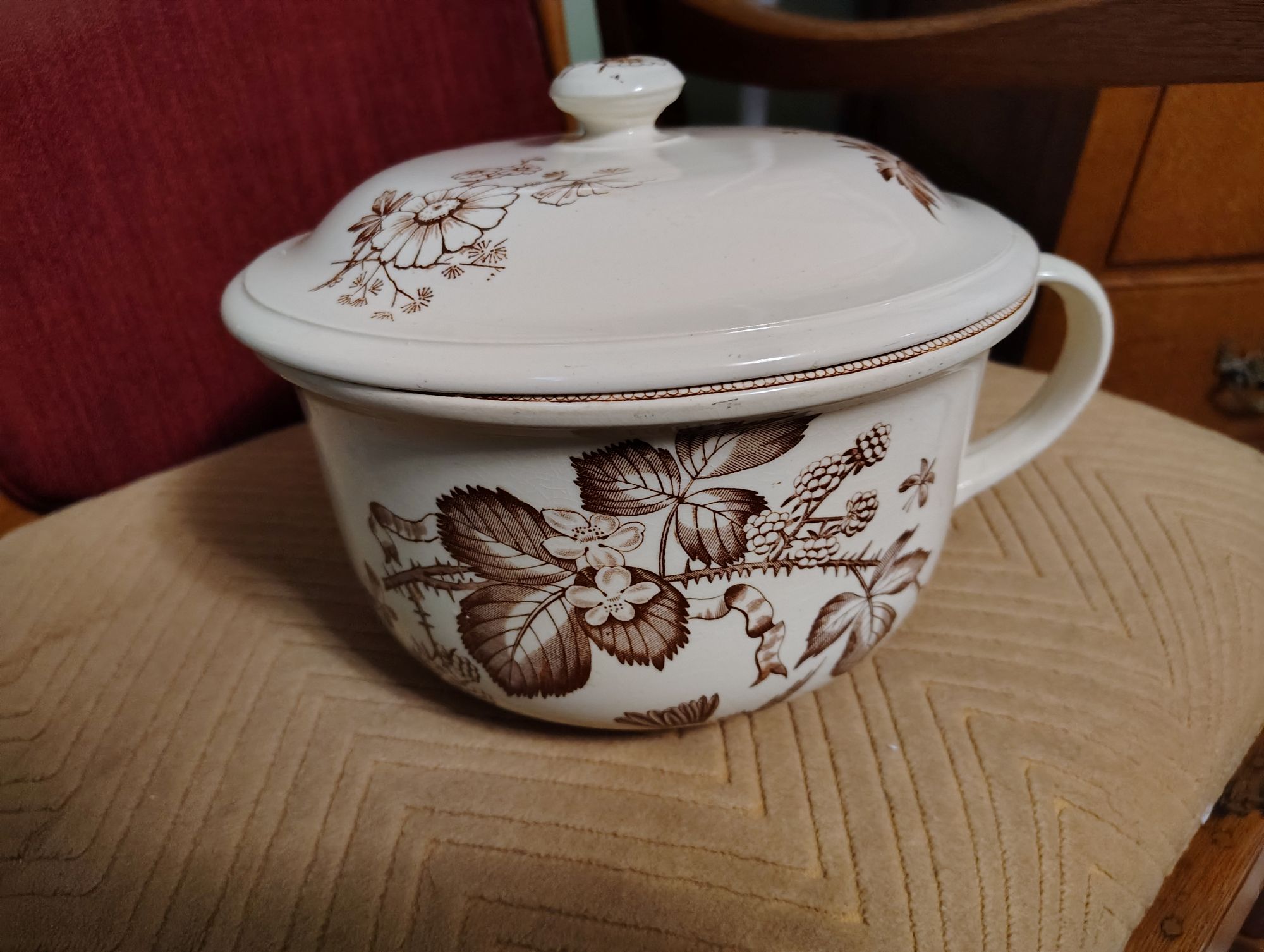
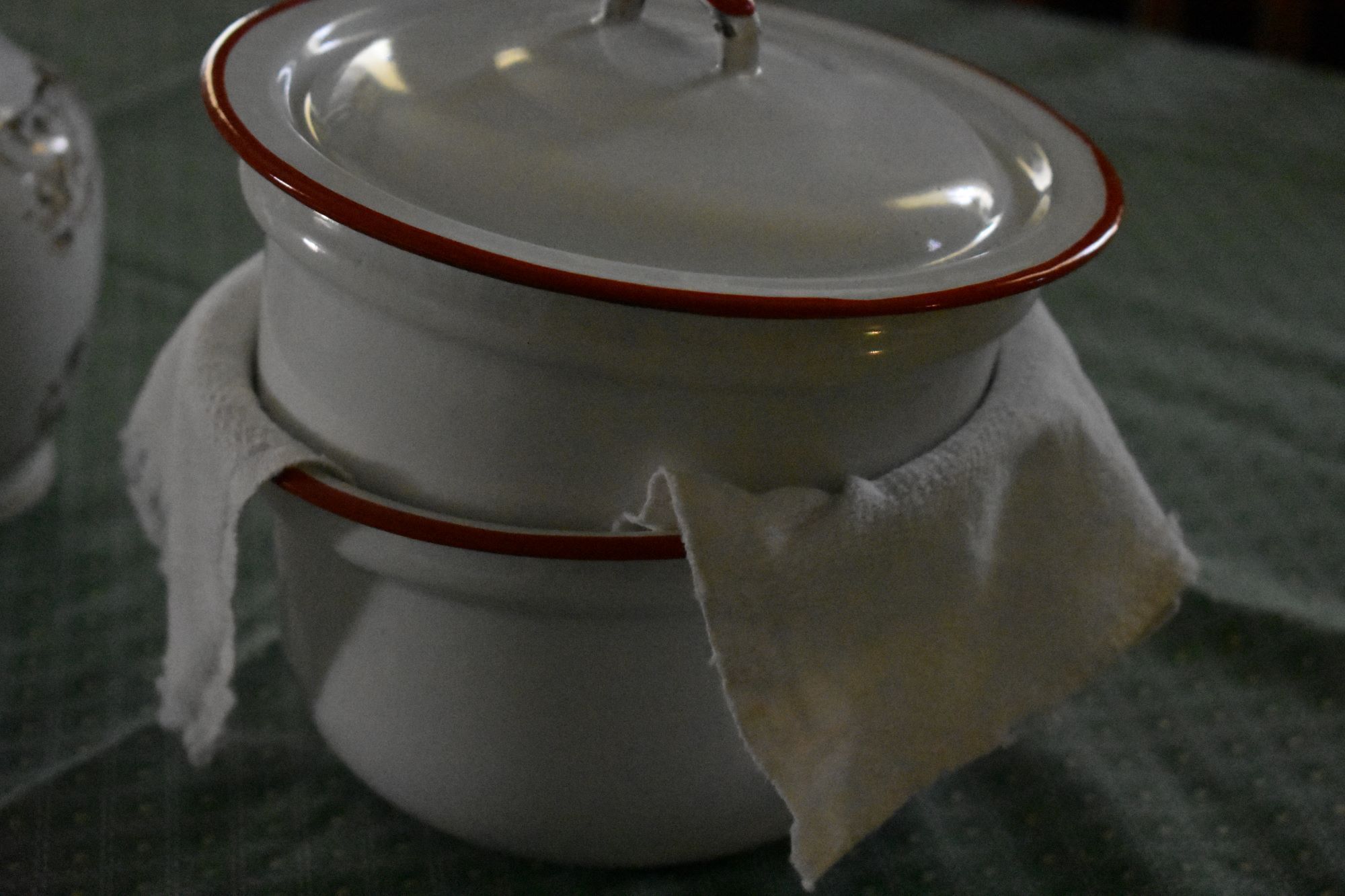
The chamber pot can be ceramic, porcelain or and enamel pot with lid short enough to slide under the bed to use for urination during the night.
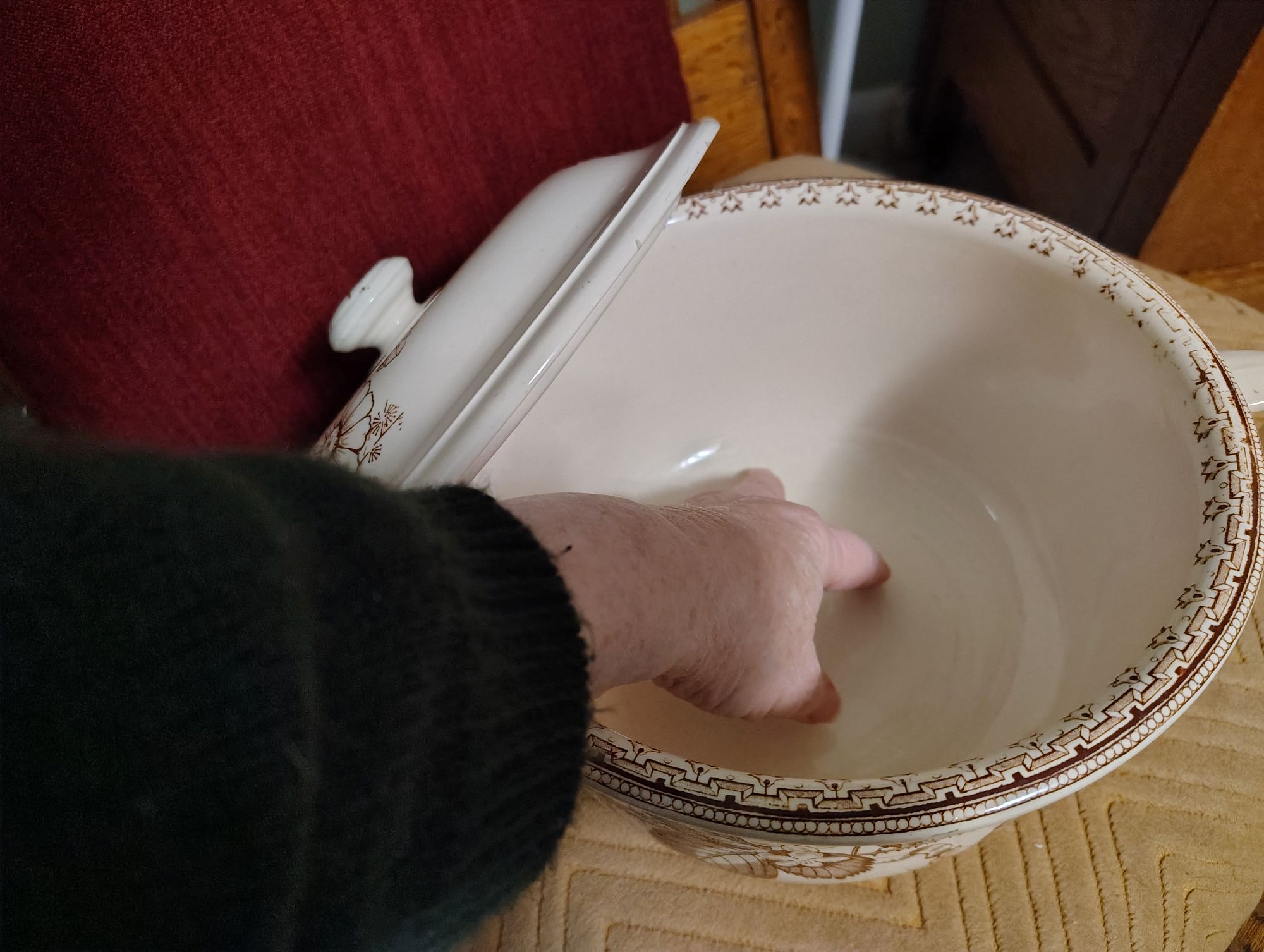
They are plenty deep for the purpose.
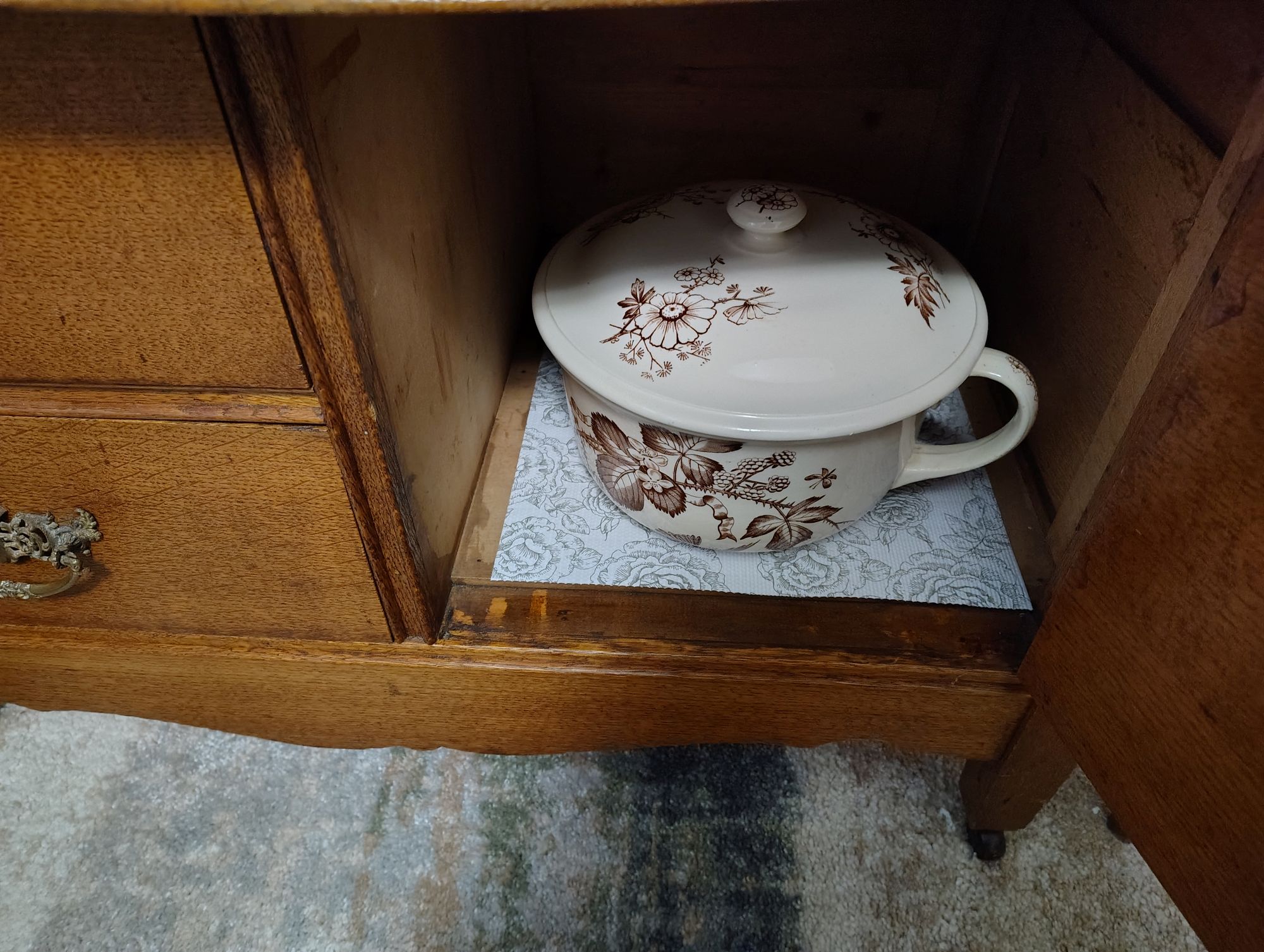
They could be stored in the wash cabinet and the slop pot in another location but they were mostly kept under the bed so at night time they could use them from the side of the bed.
During ww2 these were still needed in many places around the world, and especially in the bomb shelters.
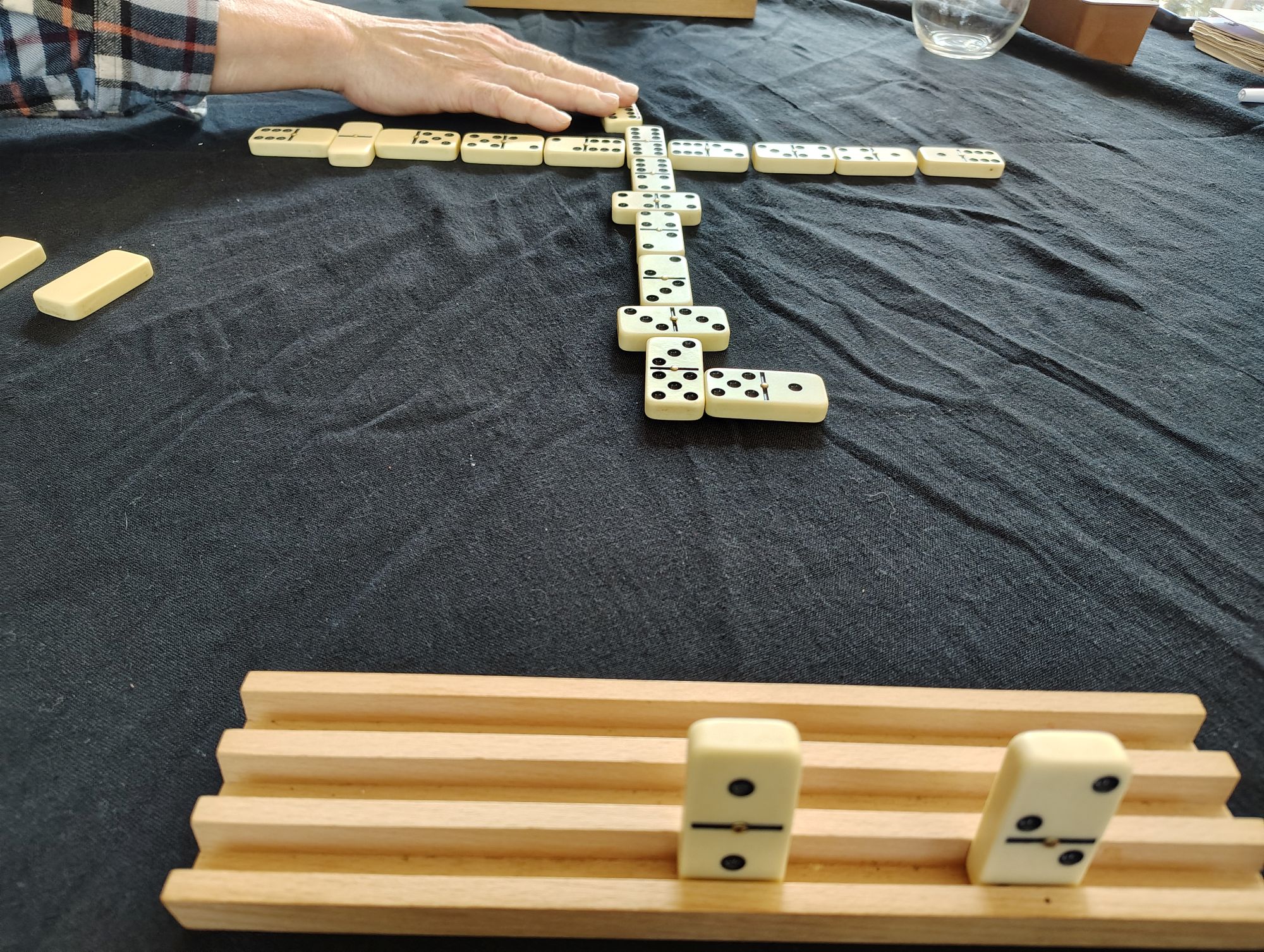
The game of dominos was very popular during ww2.

During the recent holidays, we played dominos with our son and daughter-in-law. We enjoy playing dominos.
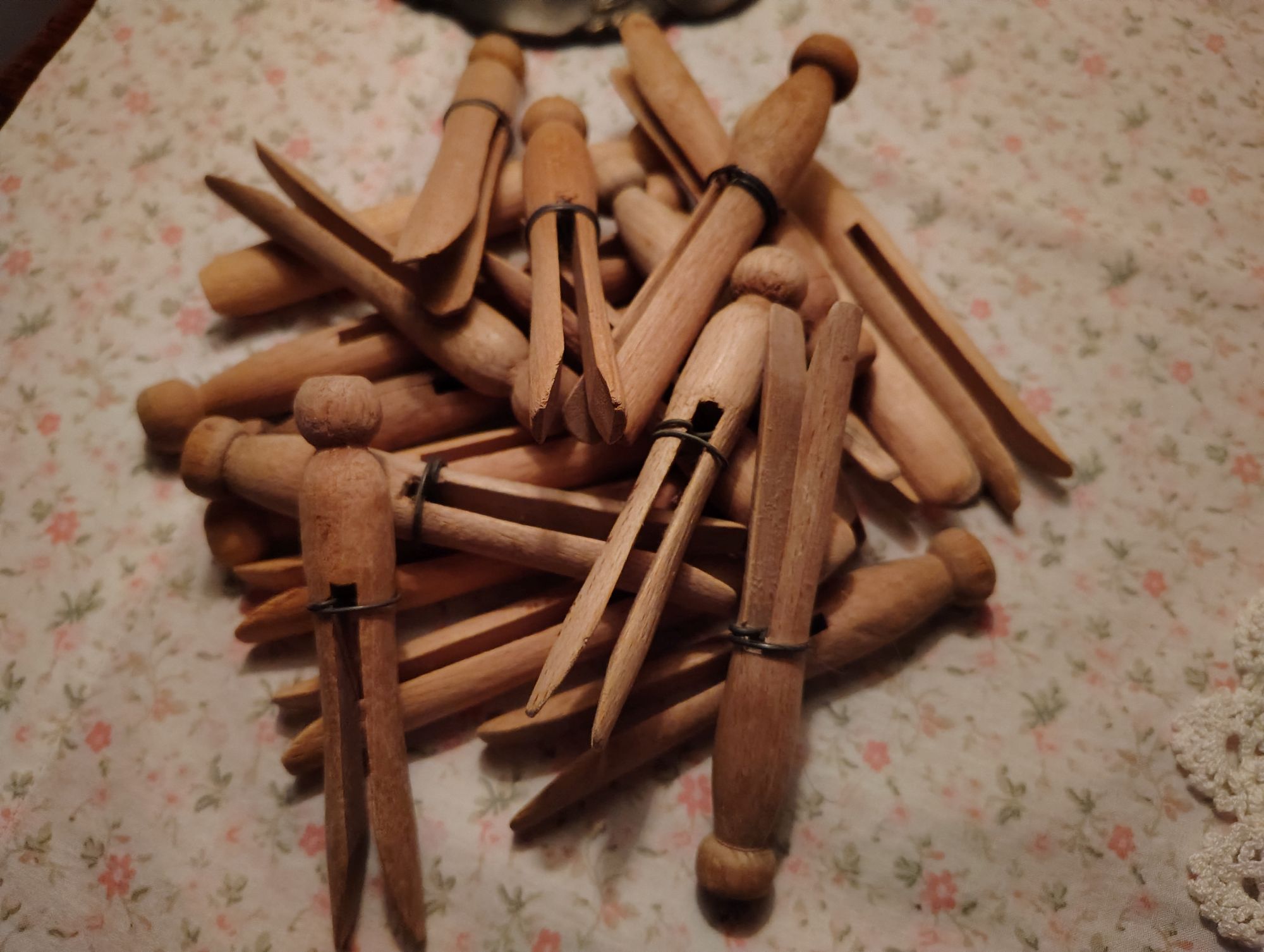
One thing for sure, 1942 vs 2026 is different. People would have been hanging their laundry to outside or inside depending what it takes to get them dry.
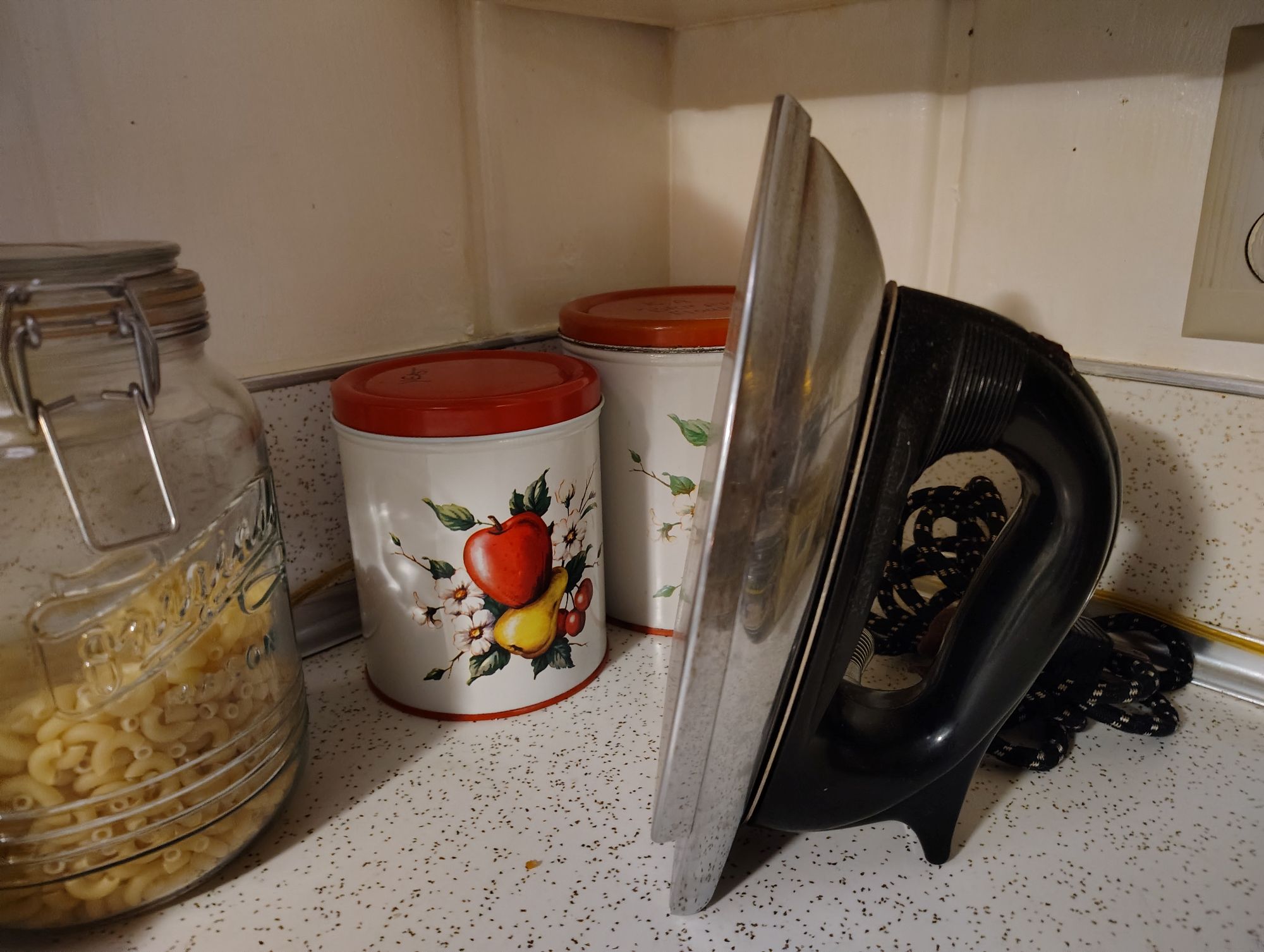
People were particular with their clothing, and linens in 1942. It would have been improper to leave the house to go shopping without dressing properly. Ironing was part of the weekly chores and normally there would be clothing, bed linens, handkerchiefs, table linens in the ironing basket.
People were very particular about the care of their shoes. Ladies wore stockings with a seam at the back, but during ww2 they were considered a luxury and as the war progressed it became almost impossible to buy stockings due to rationing and the need for silk and nylon for military use and the making of parachutes.
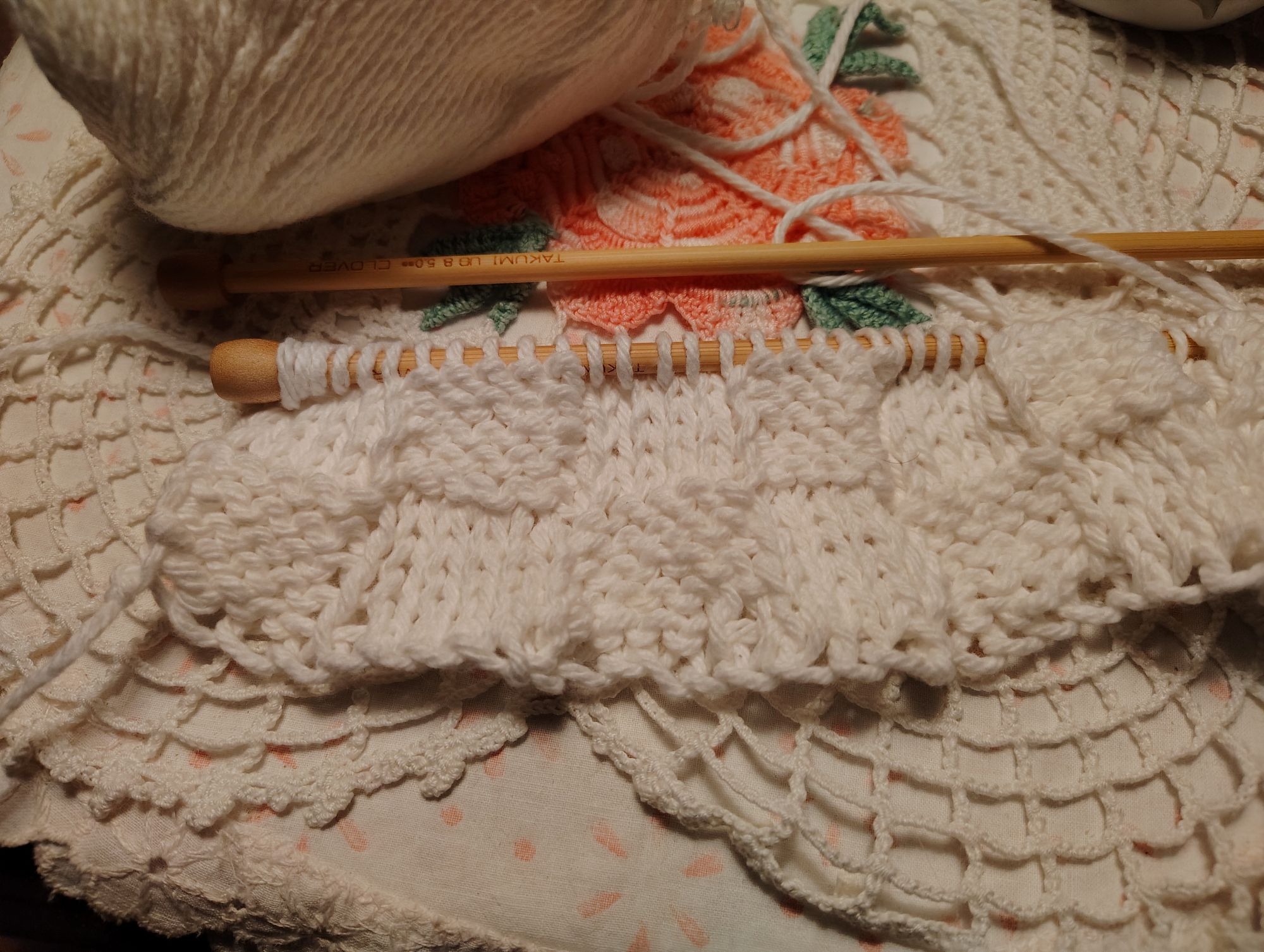
I have been knitting.
This above is one of the knitted washcloths for the war effort. There were four versions to knit. The Knit and Purl which is the one above.
.jpg)
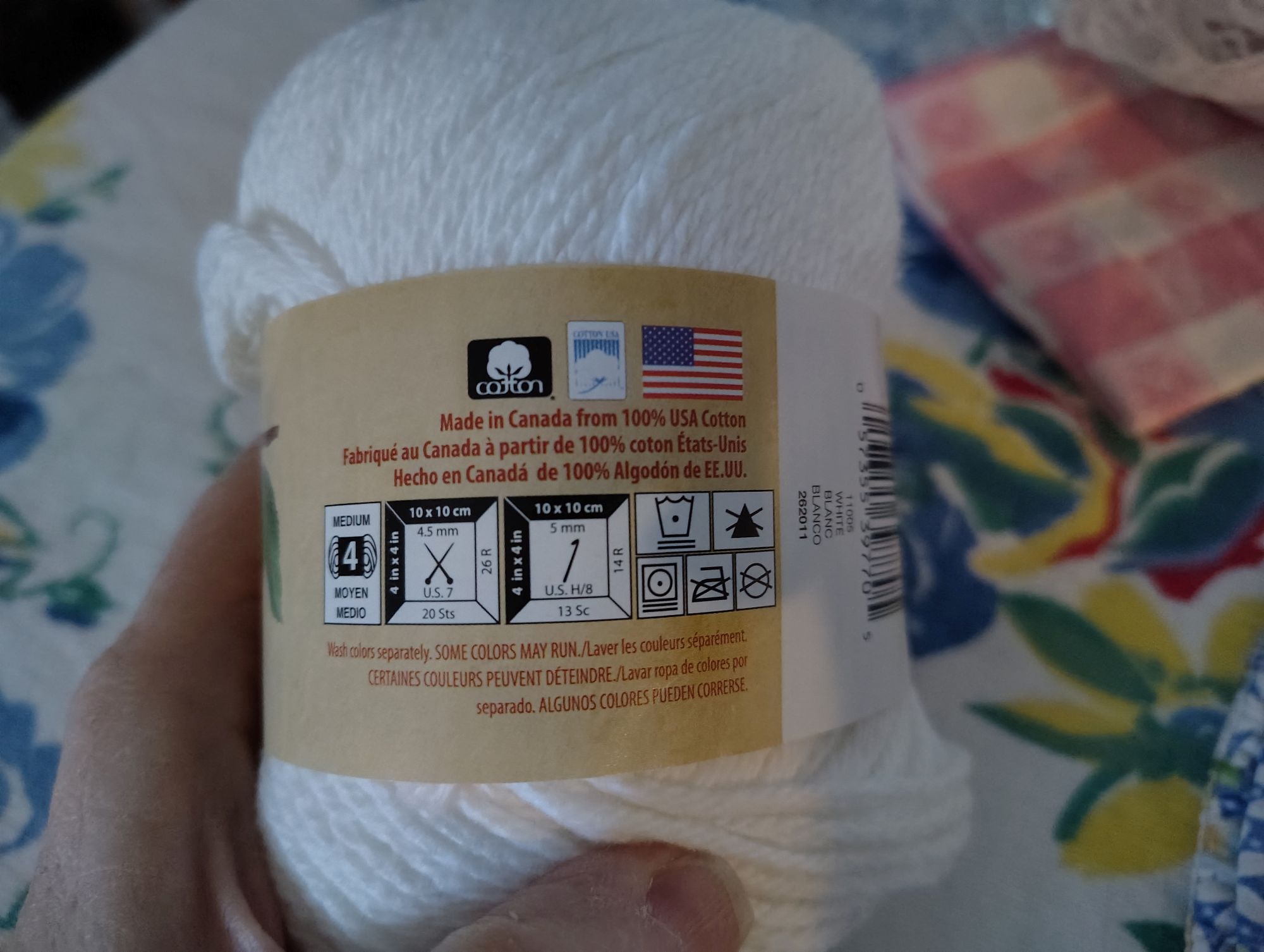
Shown above is the yarn that I am using for this washcloth.
You can use what you would normally use for a cotton yarn. I am using size 8 knitting needles but use what are suggested depending on what yarn you are using. Do not use acrylic yarn use cotton. During ww2 the red cross was very particular about following the guidelines of how and what to use.
The instructions for the Knit and Purl cloth: cast on 40, knit five, purl five, to the end, the last one will be knit. knit five rows.
Then purl five, knit five ending with knit. Knit five rows.
The next will be knit five, purl five, ending the row with knit five. Do five rows.
Continue doing this alternating each five row segment until you make a square.
The other cloths are,
Seed Stitch: Cast on 40 sts, K1, P1, across, ending with P1. Then P1, K1, across ending with K1. Repeat these two rows across to make a square.
Plain Knit: Cast on 40 sts. Knit in Garter Stitch (plain knitting) until piece is 10 inches square.
It is recommended to edge with color. Crochet a row of sc all around with 3 sc in each corner st. Do not fasten off. Make hanger, Ch 12, sl st in top of last sc, sl st in starting sc. Fasten off.
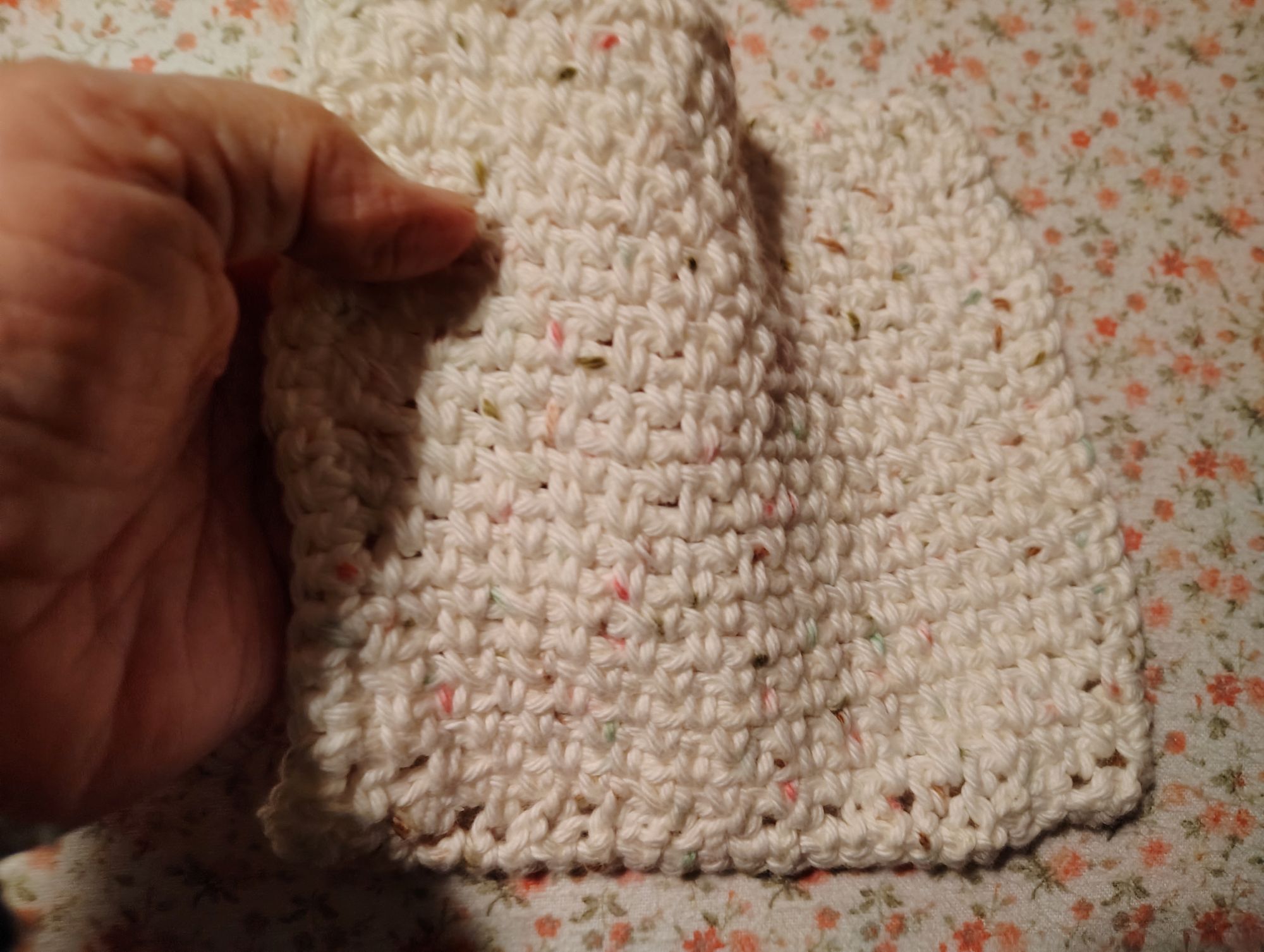
This above is a "crochet" soft baby washcloth. We cannot purchase the same yarns as they had in 1942 so I am using cotton yarn as we have today.
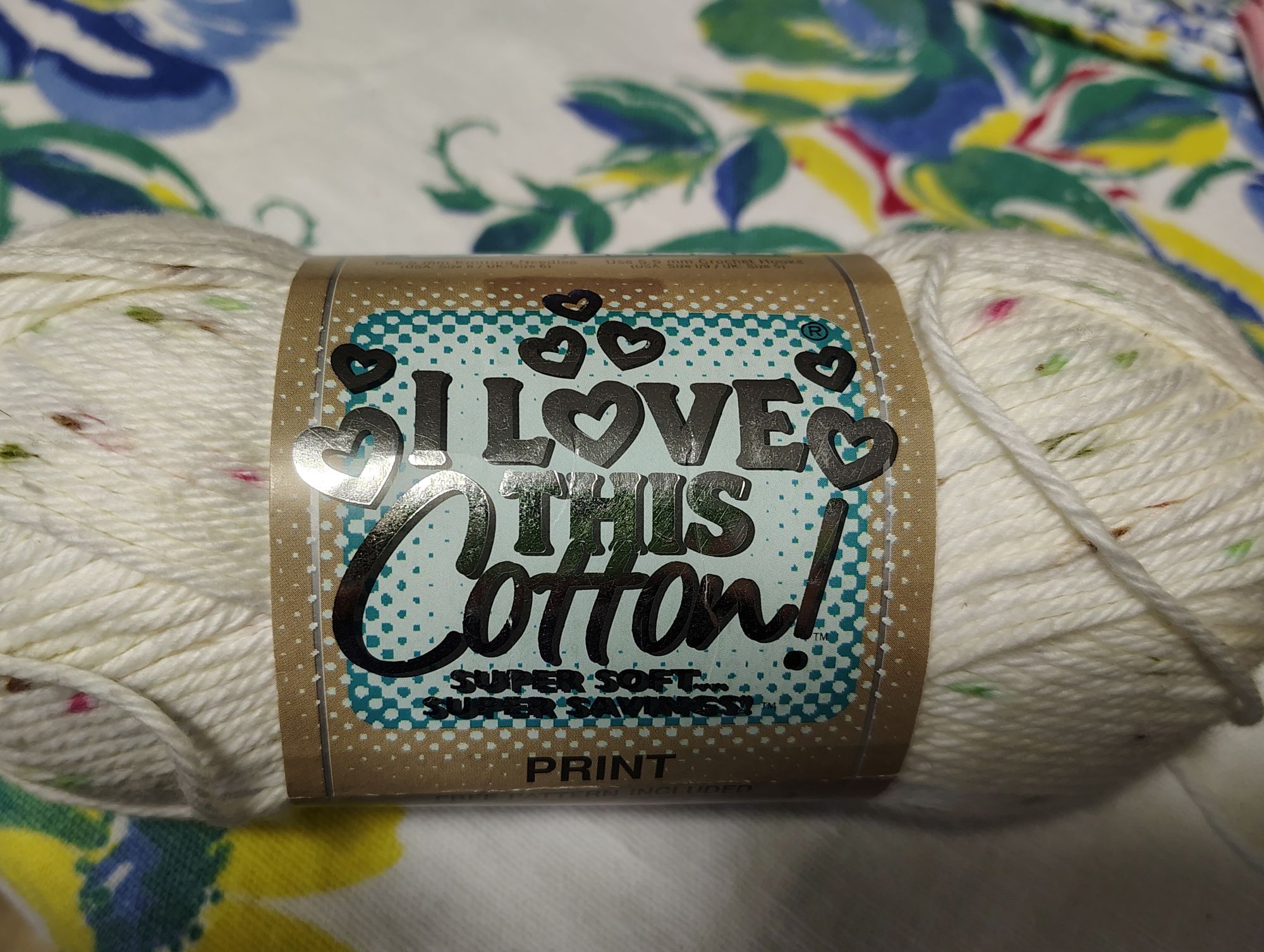
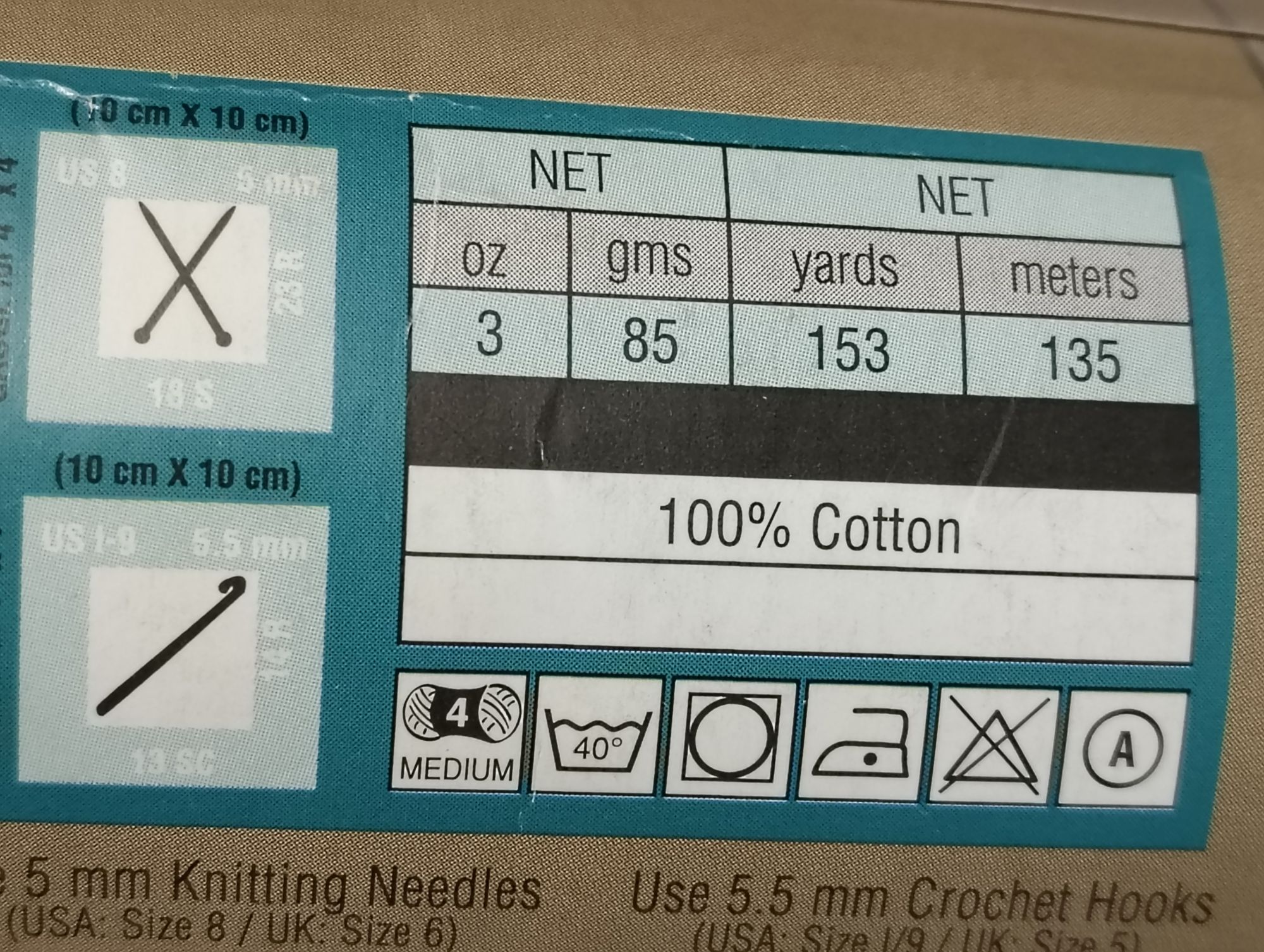
The baby washcloth yarn I am using is called "I love this cotton" 100% cotton and I used a size H/8-5.00MM hook. I will link the video that I used to make this washcloth. You can adjust to the size you want for baby or for adult.
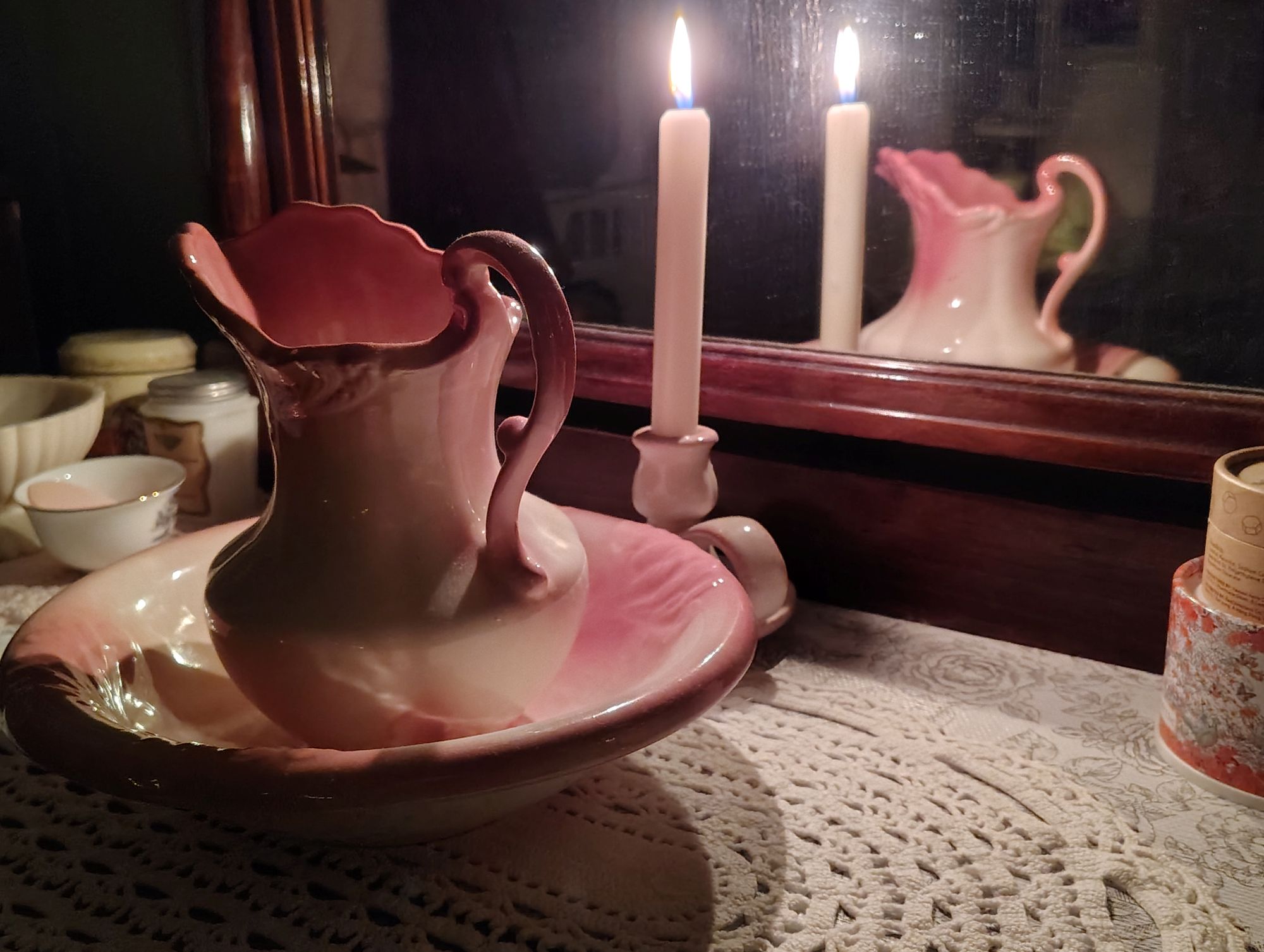
Charles and I are living our 1942 study life using minimal electricity and running water. We are alternating our use of candles, oil lamps and electricity trying to keep our electric bill as low as possible. Lamp oil and candles cost too but they actually put out some heat during cold weather.
We will be using our rechargeable candles during summer weather even if they did not have them because or real time of 2026 is so expensive now that we must do all we can to keep costs down.
We will adjust as we go through the study as they did during ww2. The rations are coming in the United States, some have already started but the rationing has gotten very complicated in the UK and other areas in the world.
I will slip in the video of the crochet wash cloth here and those of you that wish to continue on to some study information can continue to read.
Crochet wash cloth...
https://www.youtube.com/watch?v=4_lE7j4u41g&list=WL&index=144&t=298s
Below is some information for the study that you may find interesting and helpful with the study. It is a long read but hopefully some of you will find interesting. This information had been sent to the United States January of 1942 advising of experiences that England had been going through with their rationing. It is a long article but very informative. This article answers some questions that some may have been wondering about that live in the UK and U.S.
Read below. January 1942
England is still experimenting with many war time marketing controls, on Britain's rationing experience. But, there are some warnings, it is stated, that London business leaders would like to pass along to their American colleagues who are just beginning their experience with the problems of rationing. Most important is the conclusion that England has applied rationing "too little and too late."
Sales have exceeded replacements. Some goods have vanished entirely and the inventories of others are dwindling rapidly. Consumers with a little extra money and foresight stocked up. In an all-out war this causes a serious social reaction from the mass of the public. Rationing should begin before hoarding develops.
Other conclusions drawn from British rationing experience, include the following : (1) Rationing has to be applied differently to different things. Tea, sugar and bacon may be rationed individually by quantity; meat, because of wide variation of type and price, must be rationed by value. (2) Even when the supply is very small, essential items of both food and clothing can be rationed. The Englishmen have willingly accepted one egg a week because they knew that no other Englishman had more. And one suit a year is possible when no one in the whole country is allowed more. (3) Such durable goods as automobiles and radios may not need to be bought by everybody during the war. The solution is require the prospective customer purchaser to show need. (4) Not all essential items should be rationed equally. Miners need more milk and fresh vegetables than people that work in fresh air. (5) Rationing of new durable goods will not be effective unless the second-hand market is also controlled.
(6) Rationing can never be completely effective unless goods are more or less standardized, both as to quality and packaging. (7) Prices of rationed goods must be controlled or the project will fail to accomplish the desired results. (8) Large stores and chains fair better than small units when rationing is left to the manufacturer because it is less costly to serve them. (9) Voluntary merging of retailers for the duration has not worked in Britain, and the slow process of elimination necessitated by steadily declining trade volume is costly for everyone.
Britain has tried several kinds of rationing, the report states. First came the allocation to the war industries of all scarce strategic raw materials. Aluminum, copper, steel, rubber and dozens of others. Quickest to be felt in Britain was a shortage of automobiles, tires, and gasoline. For almost the entire two-and-a-half years of the war the average Englishman has been allowed each month no more than enough gasoline to drive his car 150 to 200 miles. Recently, the ration was cut another 16 percent. not one new passenger car has been made in Britain since 1939. Then shops began to run low on aluminum ware, all kinds of copper and brass gadgets, flashlights (badly needed in the blackouts), and electric household equipment.
The first actual retail rationing of daily necessities came in January 1940, when the entire civilian population was compelled to register with some neighborhood grocer (every six months) to secure prescribed rations of butter, bacon and ham, sugar, and tea. Ration cards were issued through the post office to each member of a family. This card-rationing plan has not changed greatly since the beginning, but many food items have been added to the rationing list-- all fats, meats, cheese, jam and eggs.
Two years of card rationing experience have taught the English important lessons which should not be overlooked in the United States. Now, all wholesalers and all retailers handling rationed items must be licensed by the government through the Ministry of food. Time and paper are saved by having the public register with retailers once a year, instead of every six months. Coupons are no longer clipped because of the time required and the problem of keep track of the tiny pieces of paper. Instead, retailers now keep a complete register of their customers, cancel a coupon with a stamp when a sale is made and make a monthly statement to the government on stocks, purchases and sales of all rationed items. These are then checked against monthly statements of wholesalers showing deliveries to the retail trade.
Britain extended the same card-rationing plan to the clothing trades at the beginning of June, 1941, but this time individuals were not required to register with specific shops and a second type of rationing scheme was set up - the "point system." British clothes rationing books each contain 66 coupons for a year. Every essential of clothing has been assigned a coupon or "point" value - which has nothing to do with the cost of the garment. A pair of trousers calls for eight coupons, whether they cost $3 or $10. Consumers may spend their 66 coupons a year for whatever they wish. But the range is small, at that, with one suit taking almost half of a year's supply.
The "points" rationing scheme was extended from clothing to the food field last November to supplement the plan of specific rationing of such things as butter, bacon and sugar. By that time considerable stocks of Lend-Lease canned goods had arrived from the United States and were ready for distribution. New special ration books were issued to everyone, each containing 16 coupons good for use in the 4 weeks beginning Nov. 17. At the same time, the 30,000 tons of canned foods ready for the first month's trial of the new point plan were catalogued on a coupon - value basis. As in the case of clothes it is not necessary to register with a special shop to use the new "points" food coupons and the entire month's rations can be spent at one time.
Britain is using a third form of rationing which is already familiar to the United States - reduction of output at the manufacturing level. From the first there was no effort to control the distribution of this reduced output to retailers or to the ultimate consumer. In most cases, old customers were given a preference and one - time buyers cut out entirely, or there is little incentive for manufacturers to go after new outlets. And for the first time there has been a battle between the chains and the independent for their fair share of the reduced supplies, with the small independent suffering.
Britain has made no complete survey of the effects of these restriction measures on the distribution system, but there have been some drastic and unexpected changes. Thousands of shops have closed, some, of course, because small proprietors have been called into service, some because they couldn't line up the 25 registered customers called for under the rationing system. Of 232 shops operating in 1939 in Streatham's a London suburb, 101 - or 44 percent- had been closed by the Summer of 1941.
In non - food lines, radio and hardware dealers and furniture and decorating shops have been hit worst, with the number of drug stores, beauty parlors and news dealers declining noticeably. In contrast, the number of "pubs" in Britain actually increased in 1940, and the volume of their business continued to expand into 1941.
In general, it is stated, big stores and chains have stood up best under the emergency. Authorities estimate that not more than 5% of these big shops have closed.
With volume of business generally declining or barely holding its own, British retailers have resorted to all kinds of economies. Savings from the decision to stop the sale of wrapped and sliced bread are estimated at $4,000,000 a year. Most soap is sold unwrapped. Sugar, raisins, and butter are now sold almost entirely in bulk. Tubed products, such as tooth paste and face cream, come in the bare tubes with no outer box.
A few companies have gone together to produce standard goods sold in standard packages bearing the names of the brands they replaced. Some butter, soap, and tooth paste are already sold this way. All gasoline has been advertised and sold as "Pool Petrol" almost from the outbreak of the war.
End of the typed article about rationing in England. See below...
Since this is the first post of the new year I would like to know if there is something that you are hoping to learn from this study of 1942?
Some of you simply enjoy the 1940s, the hair, clothing and music and that is fun too.
If there is something that you would like to research for the year of 1942 but you do not have a way to research, just ask in the forum and I will see if I can look it up, or possibly someone in the forum may have a way to research in their area. We are from all over the world so we have different ways to research.
With the uncertainty of the things going on in our real year of 2026, I feel that anything that we can learn about the home front during ww2 could be helpful knowledge today.
Happy New year!
Grandma Donna


