 About gDonna
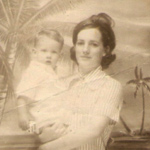
 The photo is my son and myself. Now days you can get a photo made to look old like this one. This photo was taken when this was the new look.
Harry S Truman was president when I was born and world war II had ended. I grew up in a time when lunch was put in a brown paper bag and a sandwich was wrapped with wax paper. There was no such thing as pantyhose, we wore stockings that attached to the rubbery clippy things that attached to the girdle. Convenience stores were not common and when we took a trip we packed a picnic basket because many places did not have fast food. Highways had places to pull over and stop, some with picnic tables. Read more ....
Comments On Article: Welcome To 1942 Again!
If you would like to share your comments for article Welcome to 1942 again!, this is where to do it!
Click the Reply To This Topic button below to post yours.
My grandparents built their small farmhouse in 1942. I think I'll look into home building in 1942. It will probably be a few months before I can spend time on that though. I'll report what I find.
Hi to one and all,
Like a lot of people who are growing older,
We both are in our 70's my dear wife just 70 & im 77in january,
Due to us aging and having no family "It's a case of what the future holds for who ever go's first and about living in todays very strange world of both cost of living and the fear of who's knocking on the door?.
But thanks to both reading this forum and in my case being looked after from my grand mother & father from an early age I could still remember they way my Gran did everything herself,
The Importance of good home cooking and those smells coming from the kitchen as I arrived home from school,
She gave the importance of good stews/home made bread/ Eat whats on the plate and not being fed on sweets and plenty of veg,
When it came to heating she had what I called the witches grate, (wood/coke fuel) and it had two ovens "One a higher up the grate & larger for bread making etc And one lower down near the floor this was the warming oven for the cat to use when she felt the need and it was also for our night wear to be warm pre going to bed.
The use of candels & oil lamps was very offten as it did give off heat and added that cosy feel to the lounge and bedroom, Plus as has been said it kept the bills down a little,
Now as I said at the start of this little offering Im all for saving what food I can "As is my wife" And a lot of my up_bringing has come into place, every scrap of veg is used including the peelings cooked for the birds, We are not scared to "Not to buy packaged food" because it's in a fancy box etc with a picture on it of mashed something or other with a sauage" And the words one microwave minute to cook, !!! It so simple to feed your self and perhaps have enough over for freezing for future meals if you use your head and dont buy rubbish because it looks easy & quick to cook, (if you can call it cooking)
I was amazed when an old lady once told me she saves a fortune on meaty things by buying tinned cat & dog food, She swore it tasted as good as the fresh stuff but a hell of a lot cheaper & she'd read it was perfecty healthy food.
We now live deep in the countryside and we enjoy good food and try to be warm in the Winter and take life at a good pace & not run around like headless chickens wanting to be fooled by semi fresh rubbish,
When i see the latest clothing ideas (rip your jeans at the knees)) because it's the in thing !!!!!
It makes me feel that I made the right choice years ago to buy some good quality jackets "Tweed & leather" being my choice & a few from the red cross centre, And im still wearing them today,
Some folk ask "What was so good about the Good Old day's?
My reply "It produce people who knew what was a good way of life and not tobe wanting what your parents have & worked for Now with out putting in the effort to both Ask those who've been there , done that, And also learn for your own future.
I am enjoying reading the best selling books of 1942. In January 1942 the best selling nonfiction book was Berlin Diary by William Shirer when he was a European correspondent for CBS Radio during the period leading up to WW II. The best selling fiction was The Keys of the Kingdom by A.J. Cronin. I have always loved the Big Bands so listening to Glen Miller’s The Chattanooga Choo Choo is a pleasure; it was #1 on the Hit Parade in January, 1942. And I like to turn the lights off and listen to the Luxe Radio Hour mysteries (available on YouTube).
Hello All who are in this space. Happy New Year to us all and extra thanks to GDonna for providing us a view into the past. It is helpful to teach us how to save and not waste a bit more and to also remind us to be grateful for what we have today Here’s to a peaceful 2026!!
Happy New Year to all - we slept right through it, didn't hear a thing. These days we prefer to just continue our usual routine and are in bed way before midnight - and personally no matter how much pleasure they give, I shudder at the millions spent on fireworks all over the world and can't help thinking what a total waste of money when people are living day to day trying to feed themselves and keep a roof over their heads.
I also love the big bands and listen to them regularly - I was born in 1946 and some of the things mentioned are relevant to my family - we still had backyard "dunnies" (Aussie term for outdoor lavatories), and hand pumped water - and kerosene lamps, kerosene fridges or iceboxes - all of those things resonate.
I look forward to reading more, and found that wartime account from the UK to the US very interesting regarding the rationing.
Thank you so much for such a lovely and informative read! And for those washcloth instructions, that is one of my favourite things to do, knit my own washcloth/dishcloths. I feel like my thought patterns and lifestyle is very much like this era without always realising it. It is such a challenging world we live in, in so many ways, it's certainly a treasure to reflect and learn from the past and hold onto those values and lessons : ) blessings for the year ahead xx
I remember my great grandmother having those metal curlers!! Where did you find them??
My grandmother used to insist that I roll her hair on metal curlers. I hated doing it because her hair was not clean. Still, back in those days, you did what adults asked.
As a child we moved a lot and mostly had modern (inside plumbing & electricity) but sometimes not. One place had cold running water at the kitchen sink but no bathroom. When I was maybe 5 the whole town had to get typhoid shots due to local wells being polluted. I vaguely recall going to the gymnasium and lining up for shots with mom, my sister and grandma and recall the shots made us very sick. Severe headache. Grandpa was mayor at the time so would have been helping with the vaccines. Shortly after that dad connected us to town water and sewer.
This was years ago, and I cannot recall who it was, but they unraveled the fringe from a bedspread to use the cotton yarn for knitting.
Ironing continued until the mid-to-late 1960s when perma press became a thing. My dh wore dress shirts at the time and as soon as perma press was available, I bought him all new shirts and never ironed a dress shirt again!! I didn't mind ironing except in very hot weather and no a/c. There is something therapeutic about smoothing fabric for your family and being able to see immediate results.
I was still using a Singer treadle sewing machine until 1967. I still have a treadle but need a new head for it and am tempted to buy one for 1942.
Reading the information about rationing was confusing. I cannot imagine how difficult it would have been to understand the system and all the changes let alone learning to manage with so little.
It also struck me that people who were prudent and had a stockpile were suddenly considered hoarders. My pantry is extensive, but I wouldn't considered it hoarding because it was purchased in a time of plenty and over a period of years. I would not be happy if the government decided I was a hoarder instead of a prudent planner. In December I spent $4.99 on groceries and have not shopped since before Thanksgiving, that is the purpose of having an extensive pantry.
Grandma Donna wrote,
Christine Marie R, my mother had curlers like these and I had a few of them. When we started doing history studies many years ago I added to what few I had and I found them on ebay. I would also check on Etsy and thrift stores. :) The rubber ones make pin curls. Donna
Beautifully written! I am here in 1931 waving to everyone else in 1942. I'll be there soon, I promise. :) I was thinking recently about the hard times of the 1930s US being followed by the sacrifices of the 1940s, then the security of the 1950s when people enjoyed economic prosperity and the benefits of technology in a reasonable way, to the 1960s and 1970s where we started to have too much, through the 1980s and 1990s where we had so much on offer and were in such good shape financially that it seemed positively silly not to go into debt so you could have everything you wanted, to the 2000s when the cracks began to appear and housing grew historically expensive until the crash in 2008, and since then inflation and economic insecurity has gotten worse until we have to learn all of the old lessons on how to get by all over again! But I'm not going to eat canned pet food! :)
This entire post was very educational and enlightening. My grandparents owned a grocery store in 1942, so I am going to see if I can find the ads from that time. I am excited about this year.
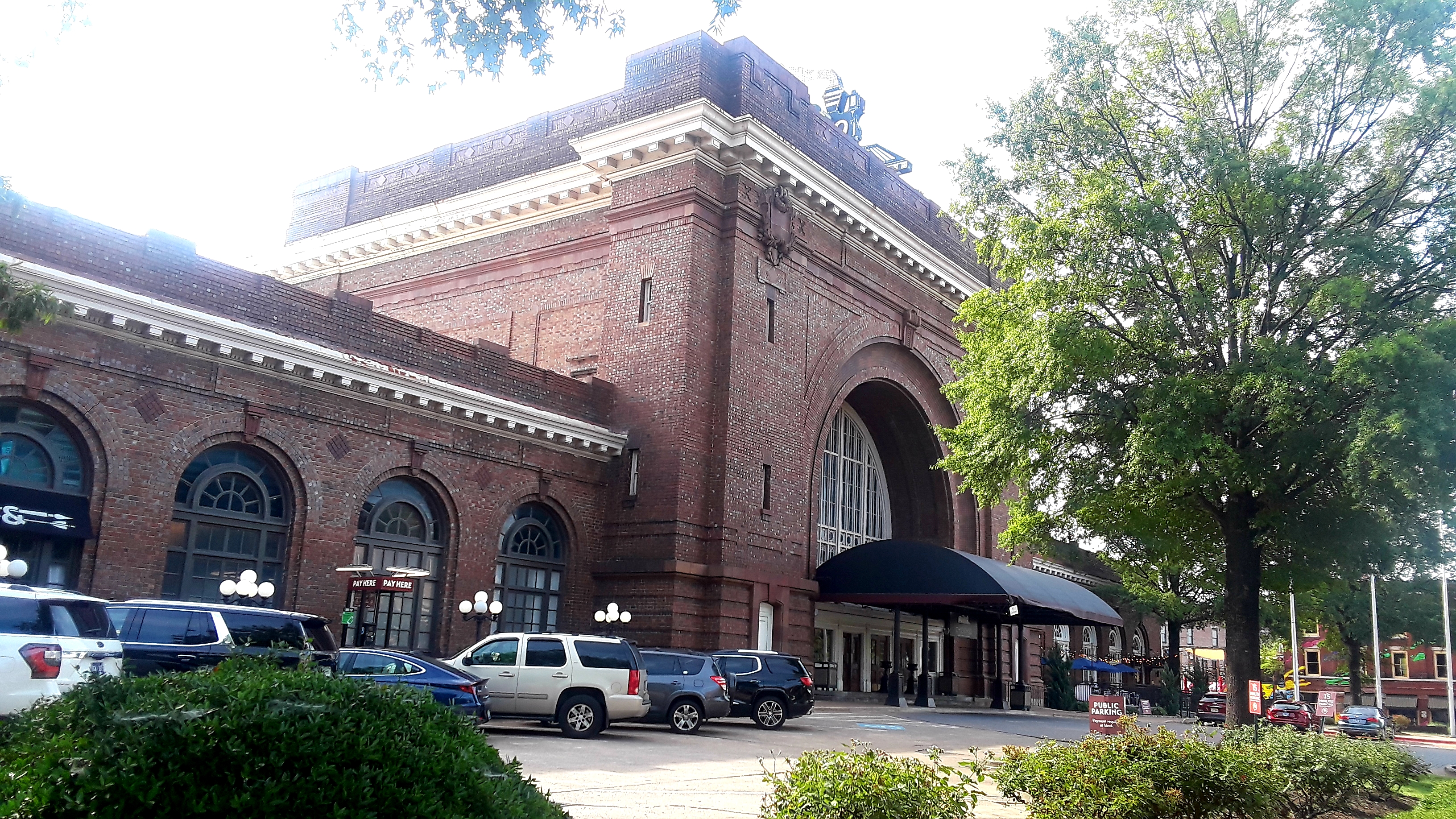
Florence M, I live in Chattanooga, Tennessee and thought I'd post a picture or 2 for you of the Historic Chattanooga Choo Choo train station. It's a museum and local attraction now, but it's still a beautiful building and interior.

Daniel A
"Some folk ask "What was so good about the Good Old day's?
My reply "It produce people who knew what was a good way of life and not tobe wanting what your parents have & worked for Now with out putting in the effort to both Ask those who've been there , done that, And also learn for your own future."
Exactly! People were much more resilient too.
Glenda H_2 My grandparents also owned a grocery store. He was a butcher and my grandmother worked in the store and doing accounting. They've all since passed.
I'm reading currently about the history of housework and also I have a book that I may have seen here called, "Thrifty Tips on the War Years." I'm thinking that the 30's everything seemed to be turning for good, then another war hits. I can't imagine with those already going through WWI and the depression, only to begin another war.
I'm finding that many homes now included electricity and refrigerators as GrD stated, but also said that some didn't like that new invention due to the dependency on them (or lack of dependency on self). Isn't that the truth! We don't miss what we do not have!! Anyway, I am reading mostly about the history of housework and home and will find some other historical facts and events in my own library to read that began in 1942.
I am here for the great information and as always, am learning. This is so exciting and so informative! I just love it!
One of my kids owns a house built in 1941 and one owns a house built in 1952. The difference in just those few years is noticeable. Change was speeding up.
On my grandfather’s farm the house had one faucet, in the kitchen, and no bathroom, so a slop jar, nicknamed a thunder mug, was used at night instead of the outhouse that was used in the daytime. Heat was provided by a Queen Bee potbellied stove in the main room. It was still that way in the early 70’s, when he sold the farm and the new owner tore the house down. It did have electricity when I knew it; probably not when I was very small
Rationing seems complicated. I know everyone had to learn it, but I pity the store owners who had to get it right from the start and be ready to adapt quickly. It had to have been very hard in small businesses. It is sad but no surprise that small businesses suffered most.
One thing about oil lamps and candles is the fire hazard. Even though I know to be cautious, I don’t like to use them. I will have to use daylight as much as I can and electric lights in the dark, conservatively.
Grandma Donna wrote,
Joan S, now that I can see to type from all the tears from laughing ,I can type this. I have laughed a some of the comments in the forum, but when I read your comment about your grandfathers house with the slop jar called Thunder Mug, I couldn't quit laughing. My family loves to name things funny names but Thunder Mug for a slop jar tops everything. Lol Thanks for sharing. Donna
After my grandparents had a bathroom, my thrifty grandmother re-purposed the thunder jug as a planter for a large rubber plant.
What a cute little child with a patient kitten:-). Also on dressing to go out- yes! I remember having to stop somewhere after basketball practice and being embarrassed because I was in sweats. Now people wear their pjs or those leggings you can see through- eck.
Looking forward to 1942. I am hoping to find a rhythm that works. They were industrious but still seemed to have down time, or didn’t seem rushed like so many things today.
Happy New Year- may it be a year of blessings for all on here:-
"They were industrious but still seemed to have down time, or didn’t seem rushed like so many things today."
Yes, that's my impression. Why was that?
Happy New Year everyone :)
Thanks for a wonderful informative post GDonna, I so enjoyed reading about the rationing. All of this info in the studies has helped me to be so much more conscious of food waste. These days I am so much better at using up every scrap and anything we can't use either goes out to the birds, or the compost. I'm that way with fabric too.
Here in NZ our apricots and peaches are both ready so I've been processing them and also preparing to make another herbal salve with Plantain and St Johns Wort. This salve is great for any little cut/scrape and dare I say it, it's also known to be excellent for haemorrhoids. All these things help our pennies too.
Thanks for all you do GDonna, and blessings to you both ~ Linda
The name always made me chuckle too. It’s really what my dad’s family called it! I’m happy to have given you a laugh with it
"Once again we go down that road to living like the past." These words under the picture of the road, at the beginning of the article, made me think of Jeremiah 6:16 "Thus says the Lord: “Stand by the roads, and look, and ask for the ancient paths, where the good way is; and walk in it, and find rest for your souls."
When I was young, (1960s/early 70s) I used to like to sometimes spend time at the family business where my father, grandfather, great uncle, and some cousins all worked. Even then it had been there for something like 100 years and so it was full of fascinating things such as a large and heavy manual adding machine, manual cash register, and perhaps the best was a freight elevator that was moved solely by pulleys and human labor pulling the ropes. It was how they moved things up to the 2nd and 3rd floors of the building.
Many people still worked in the small town and we thought nothing of walking to work and back home or to the library, grocery store, etc. I was walking a half mile back and forth to school and walking home for lunch as well, where lunch was usually quite simple such as a fried egg or grilled cheese sandwich and a cup of soup. People still dropped by for visiting, some even would walk in with a yoo-hoo to alert whoever was home. I can see that for us, life was not really all that different from the 1940s - after all, that was what my parents were accustomed to -- but it was changing quickly.
My mother remembered the Depression when she was young in that small town - hungry men would sometimes come to their back door and my grandmother would make them a sandwich. For lots of people in that town, but by the early 60s things weren't all that much better as many businesses never recovered and new ones hadn't yet been established.
I would enjoy knowing more about how adult men and women spent their leisure time (when they had any). I remember older relatives and neighbors working in gardens, sewing and knitting, repairing things around the house, gatherings to play bridge but in the 40s maybe it was Mah Jong? which I know they also played at one point because I remember an old boxed set of the tiles.
And wouldn't it be nice to know what flowers or houseplants they liked to grow? My grandmother always had a wide assortment of African violets in bloom and I am reading that they were popular in the 1930s and 1940s as a houseplant. I tried my hand at growing them a few years ago but one day found my two cats each holding a leaf in their teeth and pulling it apart, so thought it best to give that up : )
One of my grandmothers (1895 - 1979) had African violets and I can't recall her ever having any other houseplants. She had a lot of them and hybridized some to make new varieties. Her garden flowers were hybrid roses, hybrid iris and other fancy stuff for Garden Club shows. She had boxes of winning ribbons for her arrangements.
The other one (1890 - 1981) had the old-fashioned plants, her rubber plant, geraniums and several other large plants that I don't recall. She had an east facing bay window full of greenery. Most went outside during the summer. Her outside flowers were the old-fashioned variety climbing roses, phlox, bachelor buttons, daisies, ferns, old-fashioned iris, lilac, bridal wreath and cardinal shrub.
I don't think either had flowers all around the house, they had them grouped in one place.
Both had productive vegetable gardens and canned a lot each year. Both raised their families during the Depression, one in town and one on a farm.
Thanks so much for the informative post! For all of those who love the band music from the 1940s you can listen to it here: https://1940sradio.com/
Thank you for the interesting post!
I am curious about the cabinet in the last picture of the post. I have one that is much the same, and my Grandmother always called it "the sewing cabinet." She didn't sew to my knowledge, and the cabinet was always empty. Does anyone know why this kind of cabinet was a sewing cabinet? What was kept in those deep side compartments?
Thanks!
Susan
I think it was originally marketed as a sewing cabinet. And not quite sure what the sides were intended for but I find them very useful to hold knitting needles as well as sewing or knitting projects that are in process. There are still many of these kicking around. See them for sale all the time. I think I bought mine while I was still in my teens or thereabouts.
Grandma Donna Wrote,
Susan P, The cabinet is called a Martha Washington Cabinet. It is a sewing cabinet and can be used for all kinds of hand work items. Each side is a nice deep space to hold fabric, yarn etc. One side of mine holds batting to go inside of pot holders. The other side holds fabric items that I am working on but at this time it holds yarn. Thank you for asking. Donna :)
* Edit I can add just a bit more to this, the bottom drawers holds sewing tools, it is deeper and can hold many craft and sewing tools. The middle drawer in mine I keep tins of items such as safety pins, different types of straight pins, some for sewing and some for lacemaking. I have another holder inside the same drawer that I keep my seam rippers and knitting and crochet markers, as well as sewing gages. It is a lovely cabinet and keeps everything sewing and handwork ready and right where you need them to be. :)
Happy 1942!
I have my ponds cold cream, curlers, and snood all ready to go. My family gets nervous when I go all"1940s" on them. haha.
Also enjoying reading my 1930s and 40s cookbooks I have collected. Trying to change our menus to reflect a simpler way of cooking.I copied all my mother's recipe collection and will be revisiting those again to help with menu planning.
We have a large floor model radio (non-working) from the 1940s. It is gorgeous and I keep it clean and waxed with the prerequisite doily on top. For fun, my husband found several radio broadcasts from that time period which we love to listen to at night. We hide a bluetooth speaker in the inner workings to broadcast the radio shows. You really do think it is live! I know it isn't truly in keeping with the oldways using modern technology, but with an oil lamp lit, a rocking chair and embroidery for just a brief moment you can be transported back in time.
Having read through the site several times over- this time I am actually participating in the 1940s challenge - a very happy place to be. Thank you all for the wonderful ideas and various ways different parts of the country and world had experiences we can all learn from in today's world.
Happy Friday!
A chilly morning with a dusting of snow here in Staffordshire. We were glad of our hot porridge for breakfast.
I found this on entertainment, recently when I was looking for a copy of the book to buy.
https://www.worldradiohistory.com/UK/BBC/Radio-Times/Radio-Times_BBC-The-War-Years-1939-1946.pdf
The article on rationing was interesting, Britain was not as unprepared at the start of the war as it suggests, Ration Books were already printed and ready for distribution. Stocks of imported wheat and sugar were built up, entire crops of tea were bought. People remembered the food shortages from the last years of WW1
The War Agricultural Executive Committees ordered the farmers to plough much more land for crops, and to increase dairy herds, and to reduce livestock for meat, to feed the nation more efficiently. Before 1939 two thirds of the food in Britain had been imported, farming had been in decline, still relying on horses for heavy work, and the German U-Boats were a threat to the food supply.
The Government encouraged everyone who could to grow their own fruit and vegetables with well-publicised ‘Dig for Victory’ campaigns. Women from the Women’s Land Army helped on farms. Recruitment was originally voluntarily but later conscription was introduced producing an army of over 80,000 women.
Allotments thrived with numbers reaching 1.4 million. Pigs, chickens and rabbits were reared domestically for meat. Incidentally, in 1940, wasting food became a criminal offence.
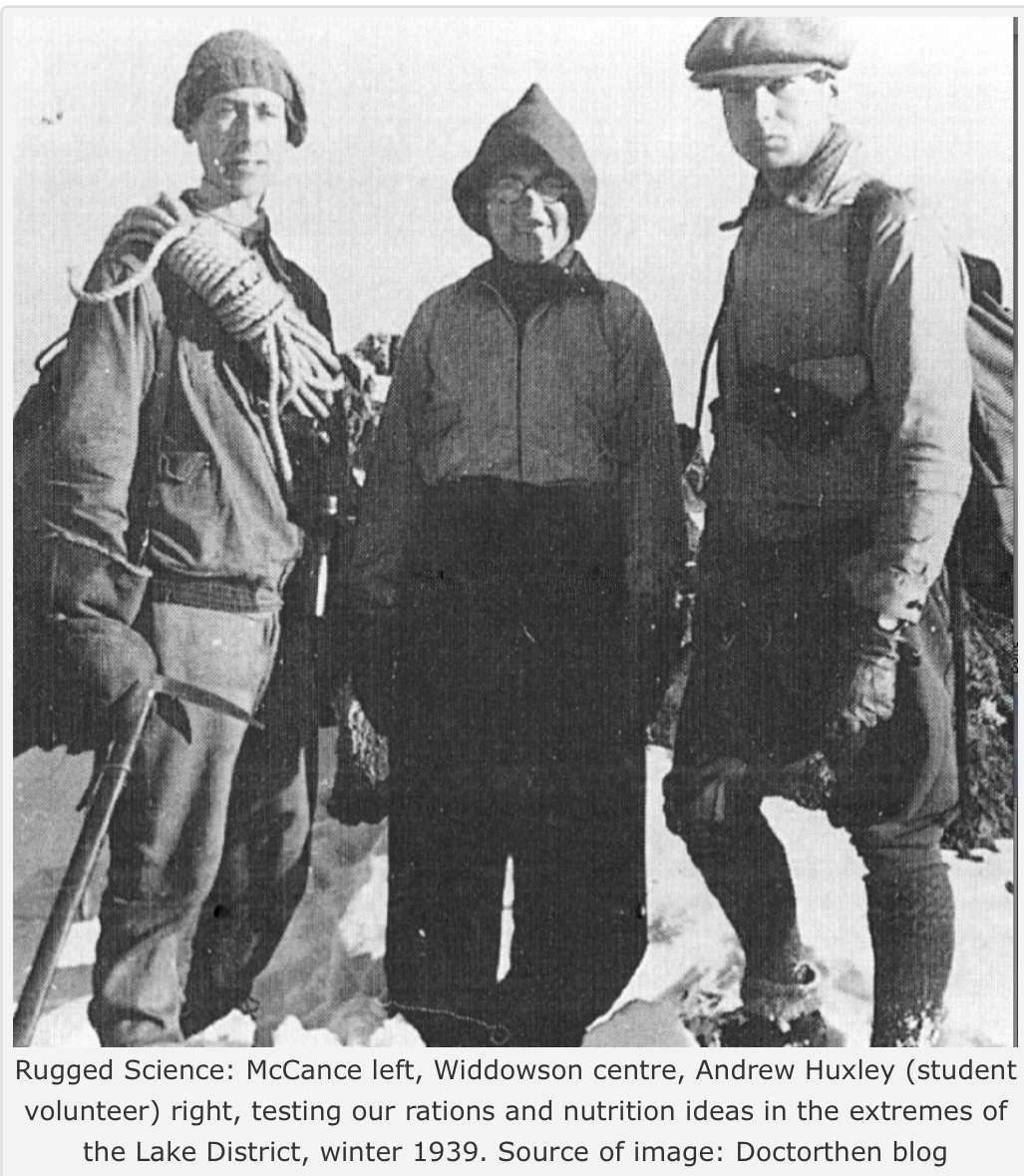
In 1939, researchers from University of Cambridge, Drs. Elsie Widdowson, and Robert McCance, and Professor Frank Engledow tested a diet of solely British produce that could be sustainable on a national scale and be healthy for each individual. The diet needed to be highly nutritious to meet the energy requirements of demanding wartime labour in factories and on the land. Their research led also the wartime National Loaf being fortified with essential mineral calcium carbonate.
The researchers took six volunteers to The Lake District and tasked them with completing a range of physically-demanding exercises on a strictly rationed diet. The successful experiment was reported to the Government and was the basis of rationing by the Ministry of Food. In Nazi Germany, rations were allocated first to those considered of value to the war effort, the rest were left undernourished or allowed to starve. In Britain everyone had the same basic ration, with just enough meat, dairy, eggs, and fats, and unlimited bread, potatoes, and vegetables to be fit and not hungry, with children allocated extra milk and eggs, cod liver oil and concentrated orange juice to grow up strong and healthy.
There was a huge campaign to educate people to make the best of the foods available. Food Facts and the latest details of rationing were published in the newspapers, and there was daily advice on The Kitchen Front on the wireless.
https://the1940sexperiment.com/original-40s-downloads/
Work canteens and British Restaurants were established to provide inexpensive meals to supplement the rations, and the many children had school dinners.
Thank you for such an informative post, Janet W. I love coming on here, I learn so much!
I don't suppose anyone has calculated just how much the basic weekly ration would cost here in the UK ( or could point me in the right direction to find out)?
Cheryl C wrote, “I don't suppose anyone has calculated just how much the basic weekly ration would cost here in the UK ( or could point me in the right direction to find out)?“
That was a rabbit hole, Cheryl.
Pre-decimal money, £. s. d. for pounds, shillings and pence, from the Latin, Libra, solidus and denarius.
4 farthings or 2 halfpennies in a penny, 12 pennies in a shilling, 20 shillings in a pound, 21 shillings in a guinea.
Prices were written £1.2s.4d or £1/2/4 or £1-2/4, for one pound, two and fourpence. 1/2½ is 1s 2½d, or one and tuppence ha’penny. Coins had names too, a thrupenny bit 3d, (a groat 4d, obsolete) a tanner 6d, a bob 1/-, a florin 2/-, half a crown 2/6, and a crown 5/-, and there was a ten bob note 10/-. There were still some gold sovereigns £1, and half sovereigns 10/- about too.
I hope that is clearer Debbie (in PA)
https://www.royalmintmuseum.org.uk/journal/history/pounds-shillings-and-pence/
Ration prices per pound, and to the nearest in decimal money. A pound Imperial is 454 grams. 16 ounces in a pound.
Sugar 6d (2.5p)
Tea 4/- (20p)
Bacon 1/8 (8p)
Butter 1/8 (8p)
Cheese 1/4 (6p)
Preserves 1/- (5p)
Margarine 5d (2p)
Lard 1/- (5p)
Meat 1/2 would buy a half a pound of mince or two small chops.
Milk 2½d (1p) a pint.
The Aldi UK site would give you today’s prices. Last week there was beef on offer at Sainsbury’s so I bought a roasting joint, cut it in thirds and froze two for future Sunday roasts, which keeps us within the equivalent of the 1/2, meat ration, now worth £3 each a week with inflation. I buy the more economical family packs of cheese and freeze it, and the butter, in weekly rations portions. We buy British cold pressed rapeseed oil to replace the margarine ration since manufactures made it Ultra Processed. We make our bread and cakes, (and kefir,) keep chickens and grow some fruit. Though our diet is based on rations and British produce where possible, we have the luxury of imported fresh fruit, especially oranges, lemons, and bananas.
What it cost - 1939
Butter 1/6 (7½p) per lb. - Margarine 6d (2½p) per lb. - Lard 7d (3p) per lb. Cheddar cheese 10d (4p) per lb. - Danish side bacon 1/6 (7½p) per lb. - Milk 3d (1½p) per pint - Egyptian eggs 8d (3½p) per dozen - CWS Tea-tips 3/- (15p) per lb. - Granulated sugar 4½d (2p) per lb. - Large tin of Lokreel peaches 1/2 (6p) - Nestles cream 6½d (2½p) per small tin - Sweet biscuits 1/- (5p) per lb. - Chocolate Fingers 1/9 (8½p) per lb. - Flour 1/7 (8p) per stone (14lb.) - Self raising flour 7½d (3p) per 3lb. - Players cigarettes 10 for 7d (3p) - Woodbine cigarettes 10 for 5d (2p) - St Bruno tobacco 1/2 (6p) per 1oz. - Marcella Elegante cigars 50 for £1/1/6 (£1.07½p). - Danish eggs, large 2/- (10p) per dozen. - Potatoes 1/2 (6p) per stone (14lb).
A live-in maid doing plain cooking could be engaged for £1 per week and a modern furnished bungalow could be rented for 2 to 3 gns (£2.10p to £3.15p) and a detached three bedroomed bungalow with a garage and garden cost £550, and a new baby Austin to go in the garage cost £122.
Barry Noble advertised: Jaffas 1d (½p) each - Nelis pears 4d (1½p) per lb - Newtowns 4d (1½p) per lb - McIntosh Reds 4d (1½p) per lb - Grapefruit 5 for 4d (1½p) - Lemons ½d (-) each - Cooking Apples 6d (2½p) for 3½lb.
Grandma Donna Wrote,
Janet w, thank you for going down that rabbit hole for us with the prices! I was just on the UK rations this morning to see when and what the items were but the list is quite large and complex.
Living here in the U.S. I can get more information for the U.S. and our rations are just beginning slowly. The UK is more difficult for me to get into and it started two years before ours started.
Just a brief mention here for the UK. One adult "Weekly" Ration
Bacon and Ham 113 grams, 227 grams minced beef, 57 grams butter, 57 grams cheese, 113 grams margarin, 113 grams cooking fat, 3 pints milk, 227 grams sugar, 57 grams tea, 1 egg. Preserves 1 pound every 2 months.
Limited quantities canned meat, fish, rice, condensed milk, breakfast cereal, biscuits, and vegetables were limited. Fresh fruits and vegetables were available but limited in supply.
Lemons and Bananas became unattainable for most of the war. Remember the song "Yes, there are no bananas". This is only a partial list for the UK. Donna
Happy New Year everyone, and happy 1942 to those doing the study!
My husband has retired. We deposited his final paycheck today, which went into savings as we budgeted this year with money from last year. I alternate between exhilaration and fear, but when the anxiety comes I remind myself that we are completely capable of living within a modest budget — it is only the culture which makes me doubt it. This entire world is a gift, and I don’t need to buy anything extra to enjoy it. We have family and each other. We have shelter, we have utilities, we have food, and we have clothing. We have beautiful dogs to share our lives with. We have community.
I’ve been trying to figure out what I want to do with my time, and indeed, my life. I reread my (handwritten) journal entries from my practice week of low tech last September, and I’m feeling called to that life. I felt so calm, with much less anxiety. I slept better. I was happier. I plan to once again leave the world of social media, online news, and yes, even message forums. I’m not saying I will never comment, as Grandma Donna’s blog is a bright spot and an inspiration, but I will be here less. I need to disconnect from the constant and nearly invisible programming to consume. I need to resist the attention economy and live the small, slow, simple life I know brings me peace and happiness. I guess in that way I am moving back toward 1942, although my goal is for my life to be timeless.
My timer is up! It’s time to go bake a double batch of muffins to use some bananas that went spotty very quickly. I never mind, as muffins in the freezer are a great snack for my son at work, and for us if we run errands over a meal time. My husband has a hankering for brownies, so I’m also going to bake those since I will have the oven on. I’ll make a big pan so I can freeze most of them for later. I’ll be cooking dinner at the same time, so it’s going to be a productive afternoon in the kitchen!
thank you to everyone for all the interesting comments. Someone mentioned being ready with their cold cream etc and the family’s look as they prepare to enter 1942. Haha My husband has rolled his eyes as I’ve purchased a $20 (new on Marketplace) food dehydrator. I also purchased the chargeable “candles”. These candles are amazing. A set of 3 chunky ones that has a remote to set for 2, 4, 6, or 8 hours. We typical read via our phones so we have our one candle glimmering and that’s it.
Have any of your checked out Flashfood. We have it here in Cincinnati and my daughter in Chicago as well. It’s produce boxes for either $2 or $5 and lots of other Items nearing expiation. Yesterday I got 20 small potatoes, 4 large grapefruit, 9 apples and garlic heads too numerous to count! But I recommend downloading the app and see if their are participating stores near you My new dehydrator will be doing the happy dance
as far as future posts: I’d love to learn about weddings, funerals, school activities.
I am thinking of trying to learn how to make granny squares this year. I have crocheted before but it's been a while and I never did advance beyond beginner level really. I like the idea of granny squares because they can be worked a little at a time while accomplishing whole pieces in that little bit of time. Yesterday I went out and got some yarn and some crochet hooks..I had a whole set (two actually) but gave them away to those who were interested in crocheting in a time when I was not able to give crocheting any time. I bought a small set of bamboo hooks just for now. I will likely get another larger set again...plus bamboo needles likely won't be an issue if I decide to take my crocheting to the hospital. I also bought yarn that is bamboo and cotton (I think). It might not be '40's yarn but I'm working a 40's skill so I'll count that as a win. The yarn is so soft and stretchy. I like cloth to be soft and stretchy with baby Jacob. He experiences so many unpleasant touches a day at the hospital so the softer the cloth for him the better. I would absolutely love to be able to make Jacob a baby blanket. I think this post inspired me to try crocheting again.
Thank you Janet W - that was truly 'above and beyond'!
I asked because I had worked out the equivalent of my remaining private pension (after paying for rent and utilities), in 1942 terms and wanted to know if I'd survive!
I worked out that I would receive £3.4s.58d per week. = 64s.58d (this seems like an awful lot - maybe I need to recalculate, although I did use a BoE calculator...)
That seems like rather a lot but no doubt, once I've calculated the actual costs of the rations (thank you again Janet W), it will shrink. I will be back!
Thank you Janet W!
When you wrote "Bacon 1/8" when you were going through the cost of rations, what does 1/8 mean? I of 8 tickets per month? 2 oz, or 1/8th of a pound?
I subscribe to Backwoods Home Magazine and today received the latest issue (Jan/Feb/Mar) and there is an article titled WWII in England written by an 82-year-old lady born there who lived through the Blitz. It is interesting and insightful about the fears of the bombing and the struggle to get enough to eat.
I have managed to get hold of Kathleen Hey's "The View from the Corner Shop", and Ursula Buchan's "A Green and Pleasant Land'' from my local library. I've just started reading TVFTCS and was surprised at how old Kathleen was when she wrote for MO. The cover picture makes her look about 18!
Donna: did you use those curlers to set your hair? They look rather torturous.
After a few comments, I realized I am interested in reading our Cincinnati Enquirer from 1942. I looked on line and all I can find is the microfiche option. Donna: could you please direct me to a digital option? Thank you.
Mine came on Saturday. I can’t wait to dive in.
Thank you for telling what you know about the 1940s. Mom, born in the mid-1930s, often told of her parents walking everywhere all week to save gas for trips out in “the country” in southern Georgia so her mother could visit with her parents. When sugar was rationed, honey was often used as a sweetener, and Mom claimed this taught her to dislike honey (Daddy seemed to have had an opposite reaction). Mom also spoke of helping with the wash with big tubs of water outside (I don’t know her age then, but she was only 9 when her mother died in 1944). Even in Georgia, everything froze on the line and had to thaw when taken inside. Mom had to help with ironing, using an all metal iron. To use it, you had to hold it with a thick rag. One day that rag slipped and the handle burned Mom’s young hand. An older friend cut open a raw potato and rubbed it on her hand. It must have worked because there was never any scarring on that hand. She often spoke of meals of rice and beans or peas. Years later when we would visit her aunts and uncles, most meals were still similar. My great aunt was diabetic so she never made sweets, but there was plenty of food. Her daily homemade biscuits were the best. Her husband and her father had built the house they lived in. They used well water, but I remember only an electric pump. My Kentucky grandmother went down with us once and never stopped telling people about having to hold her nose while brushing her teeth because of the strong sulfur smell
How are you getting on with TVFTCS Lissa G? I've been reading a little each day and it's certainly busting the myth that all people acted morally during WWII- so many incidents of pilfering and blatant theft! I had been quite blasé about how I'd cope if the threatened WWIII does arrive; now I'm not so sure...
I haven’t started yet. But I agree about the myth-busting knowledge. It’s easy to glamorize those times, but in fact, human nature has always been rather self serving for a lot of people. Not as dreadful as it sometimes seems now, but there were lots of black markets and cheating
I finished TVFTCS this evening and I have to say that I wasn't totally impressed. Maybe if Kathleen had been more of a vivid character, if we knew more about her, would that have made a difference? I'd be very interested to read others' opinions of the book.
I won't say any more until others have had the chance to read it but...Nella Last she isn't!

Loading more pages
NEW! Join the mailing list to get email notifications when new articles are posted to our site.
Thank you for joining!
IMPORTANT!
You were sent an email to confirm your subscription to our mailing list.
Please click the link in that email to confirm or you won't be added.
If you have not received the email within a few minutes please check your spam folder.