
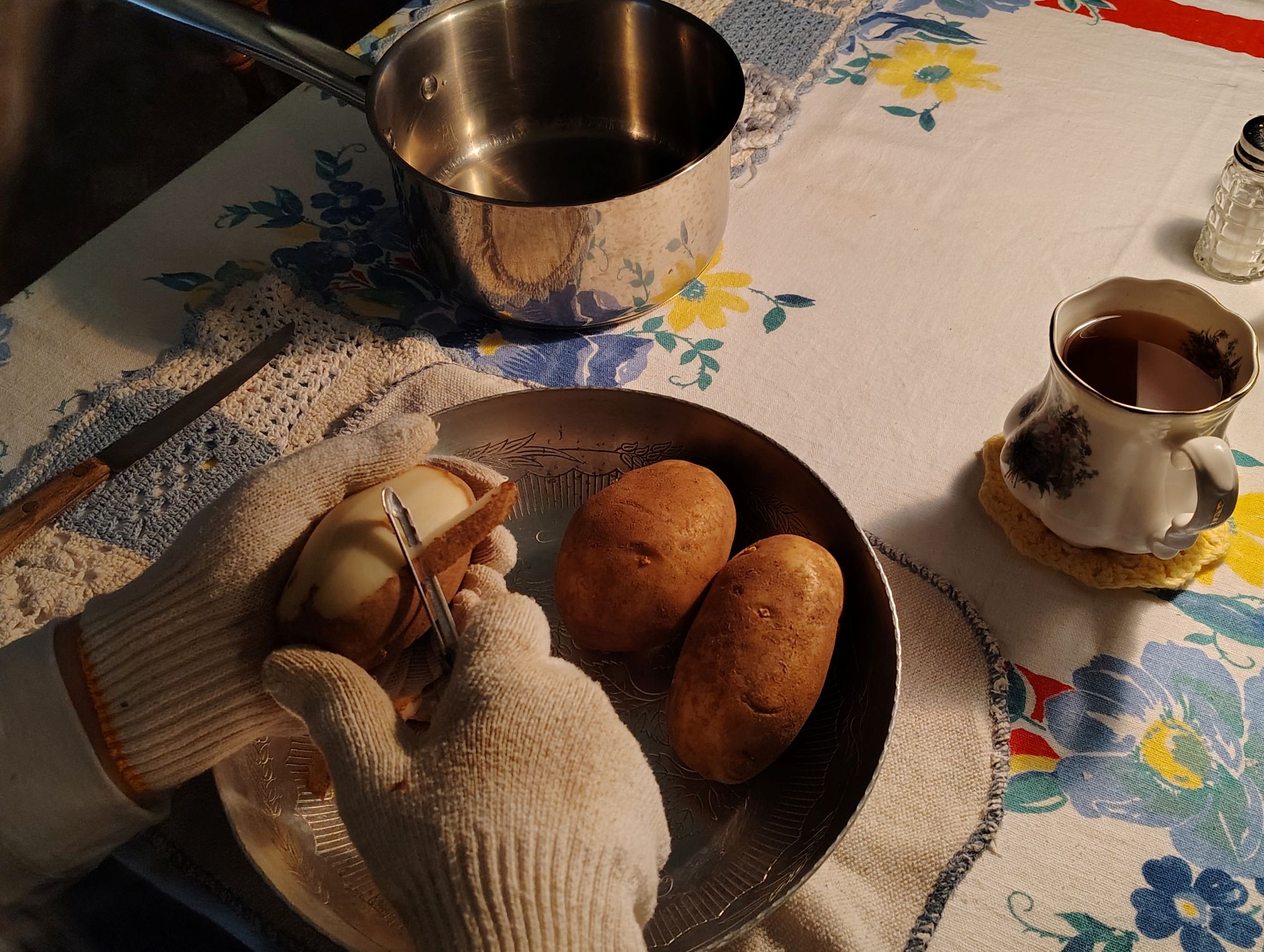
I am starting to settle a bit more in this study year of 1942.
As I read through the 1942 newspapers each day being in sync with the same day and date as we are in 2026 and 1942, I can feel the importance of household management.
I know from history what is going to happen in 1942 but I also can sense that they suspected what was coming as well. Much of the headlines were about the war and rationing in other countries. In the United States there were strong suggestions for citizens to do our part to help support the war.
A lot has been talked about the rationing but another big problem was shortages, and those shortages started in 1942.
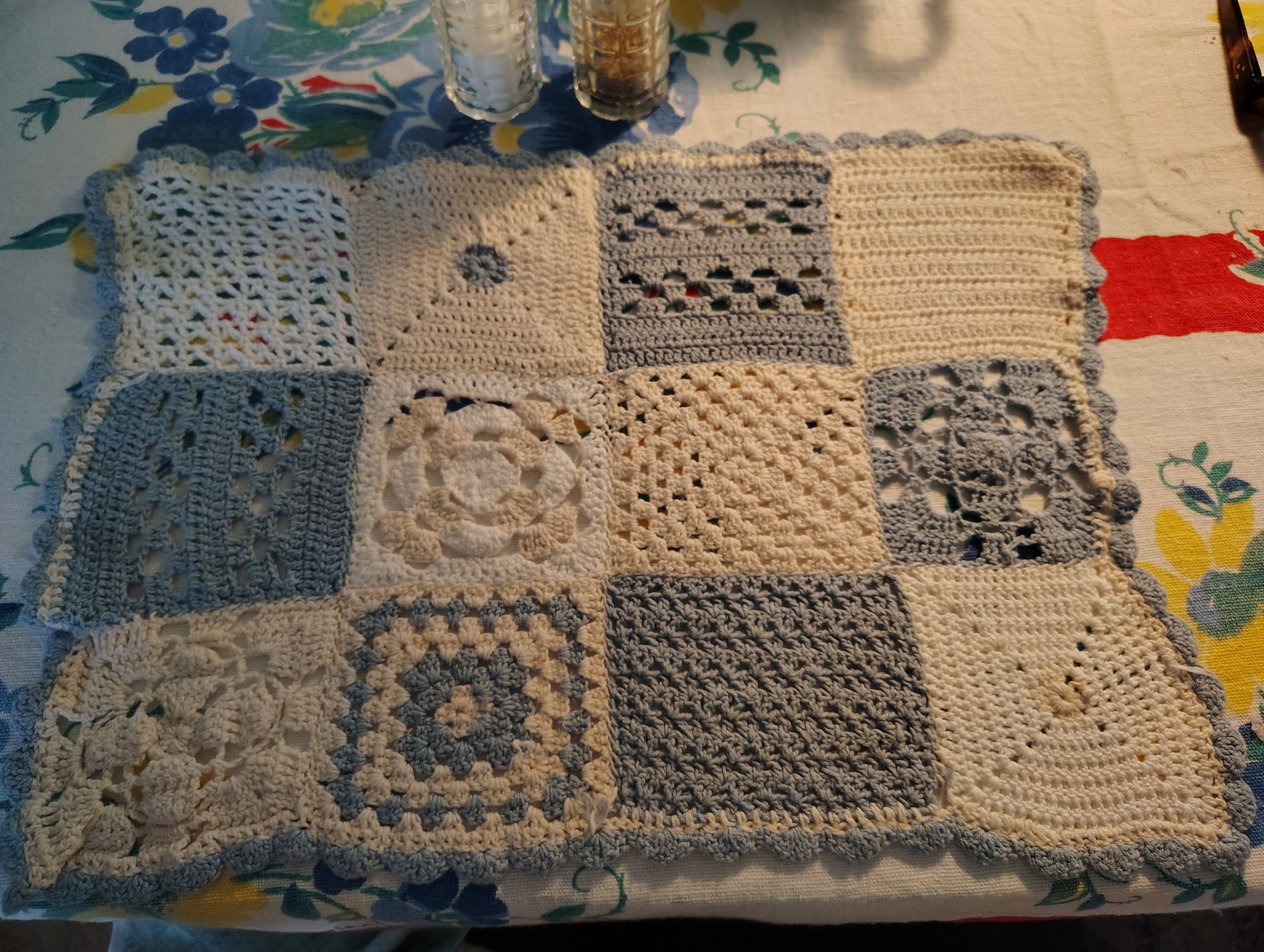
One thing I do know is that I must have my household in order for this study.
In a previous post we discussed soap. The United States did not ration soap but other countries did. However there was a soap shortage here and that was caused by people hoarding soap.
We can sense some of this from what we experienced during covid such as the toilet paper, disinfectant and medical items that became part of the shortages. I hope that people have learned from this.
The best solution is to keep at least a modest larder, a pantry or a cupboard. Besides food, household items needed for bathing, cleaning and toiletries would be best to keep extra on hand and this does not cause a problem if we simply buy a little extra to put back on our normal shopping days.
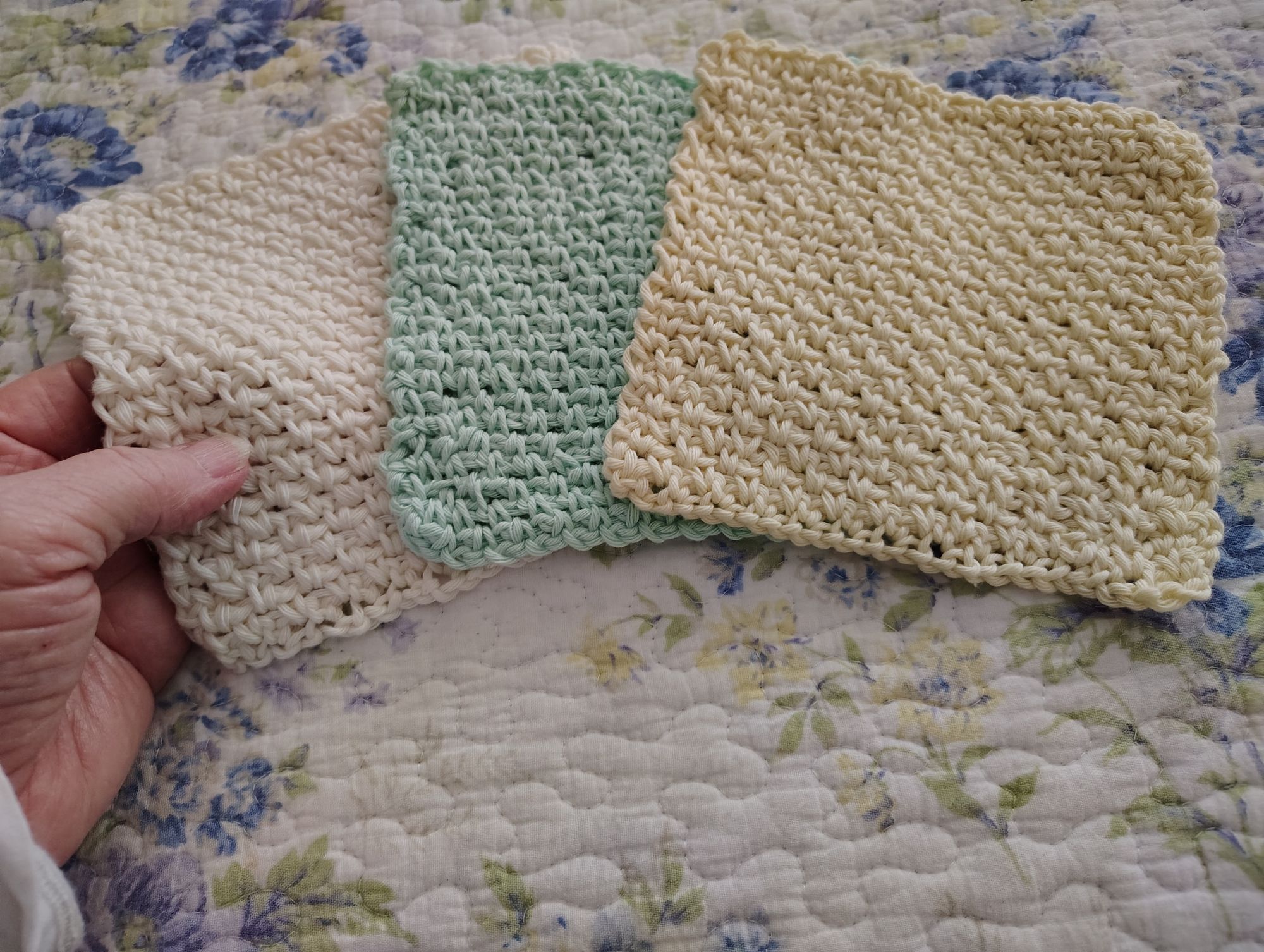
I have been crocheting baby washcloths for our great grandbaby, he is turning one year old so I made him some small washcloths he can hold on to. I used the moss stitch.
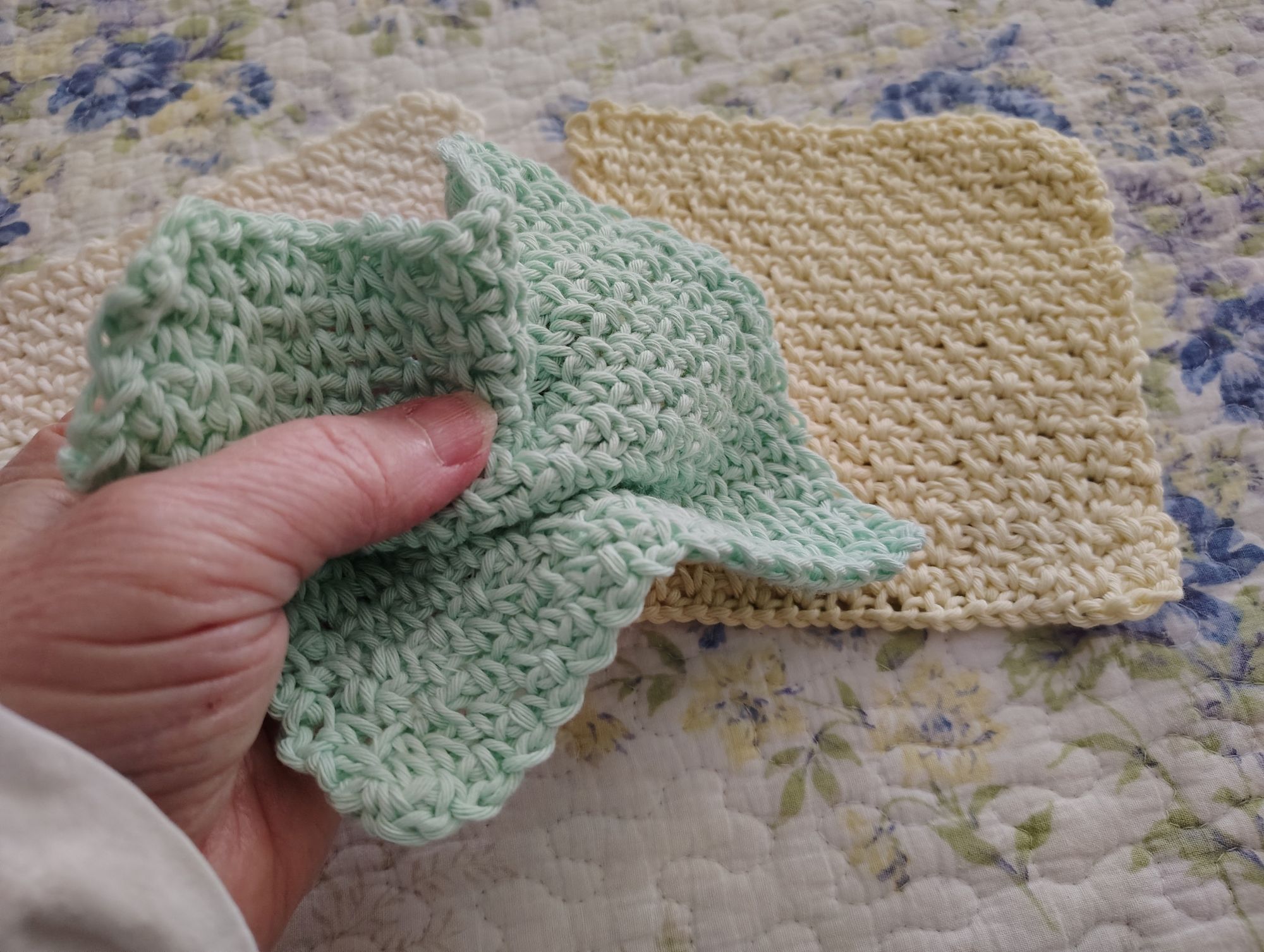
The moss stitch is a softer stitch and the yarn is a softer cotton yarn.
Each day I am taking some time in my day to mend, knit, crochet, embroidery or sew. It has helped me to focus and gives me the quiet time that I need.
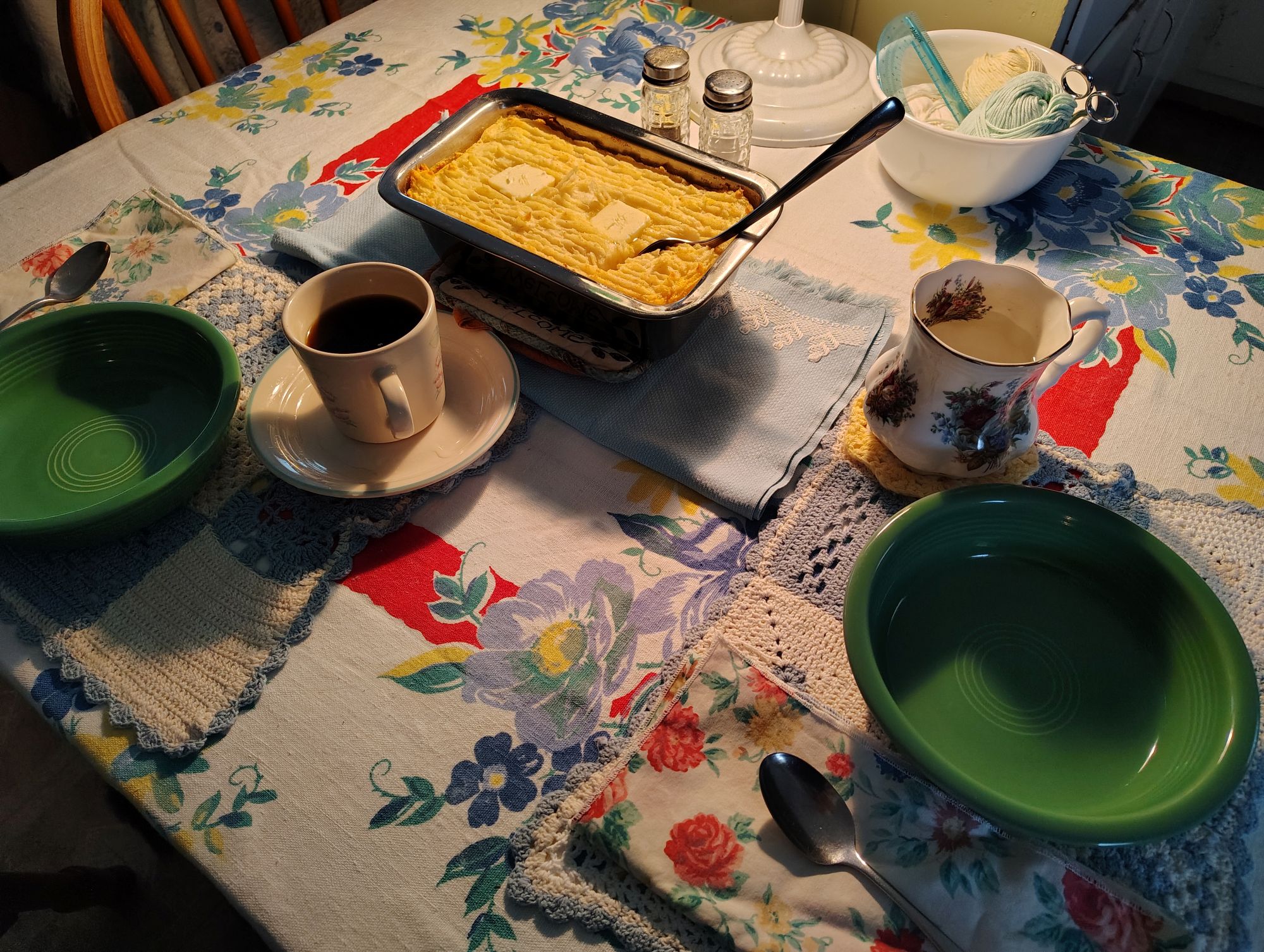
Today we had cottage pie for our main meal.

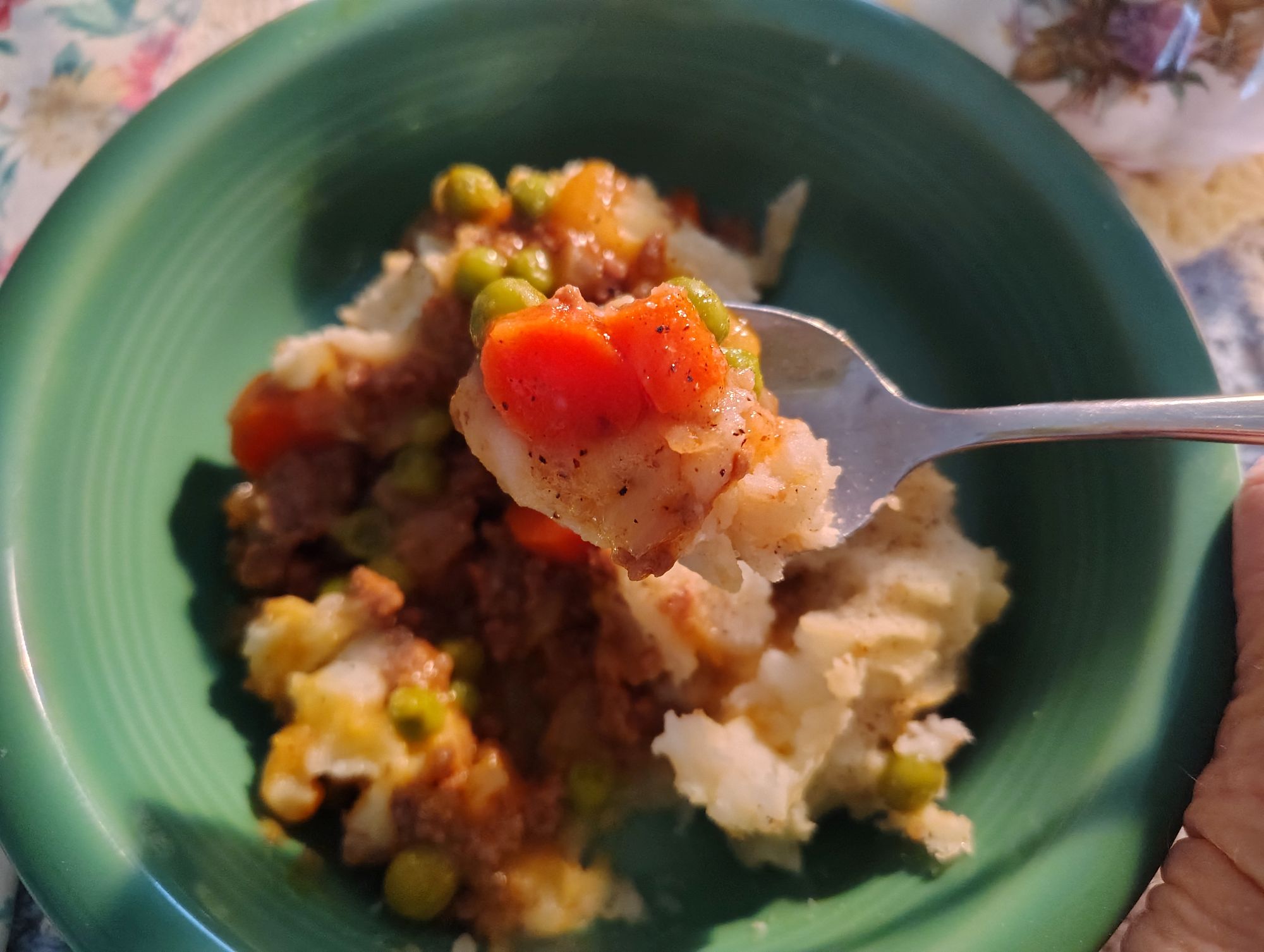
Cottage pie is easy to make and also to take to a neighbor, friend or family that could use a off day from cooking.
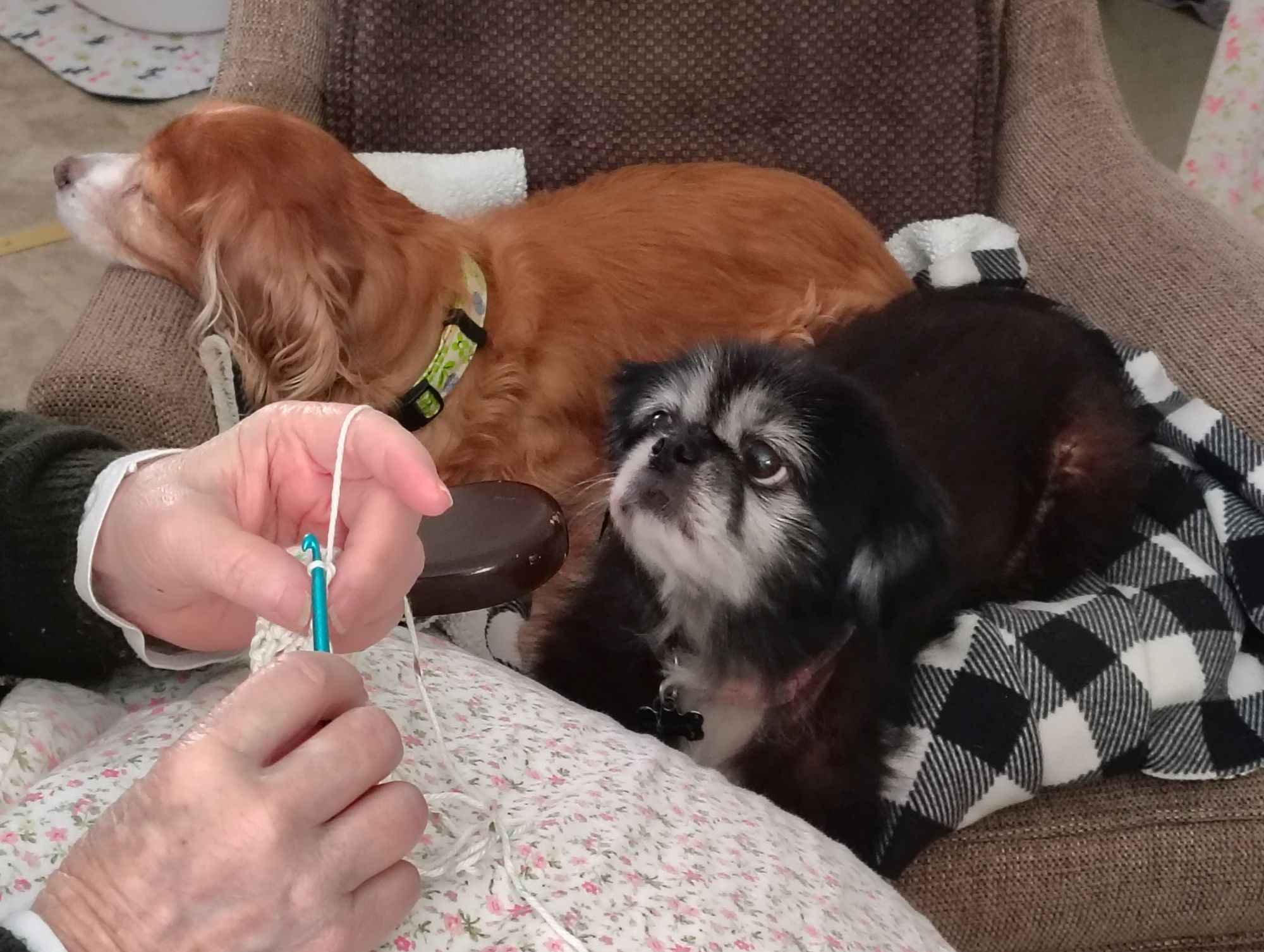
Bernadette is listening to me telling her about my crochet bathcloths for Baby Jude.
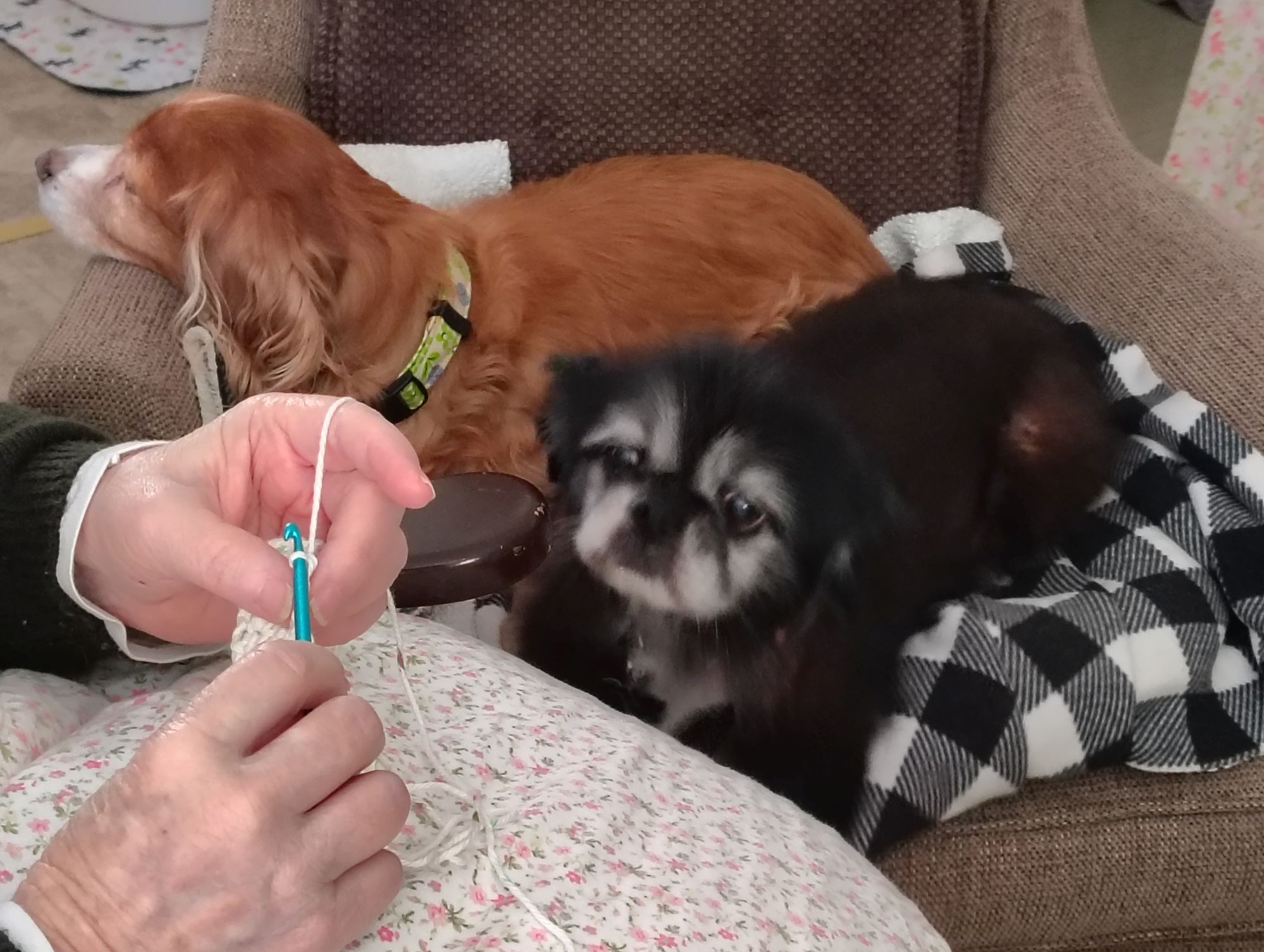
Bernadette has not been feeling well due to allergies. We took her to the vet this week for a check up. Elizabeth is napping, they both like to lay around me when I sit down.
Now to the, "OH YES THEY DID"
During all of my history research I do not know how I missed this. As I was reading this weeks paper I noticed and article that got my attention and thus sent me into a whirlwind research over something that I never knew.
Seems that we still have not gotten the feel of home front during ww2. Our rations have just started here in the United States after the attack on Pearl Harbor. Our first ration was tires and a freeze on new Automobiles.
Then I was reading the 1942 paper.
DELIVERY BY HORSE AND WAGON
First I noticed an article in the paper that the dairy was going to start delivering by horse and wagon. I thought it was a limited area and something temporary, but then as I started reading articles I realized this was big.
Article after article all over the United States, Laundry will now be delivered by horse and wagon.
Newspaper Delivery by Horses and Wagons. The Chicago Tribune has joined the growing number of newspapers making delivery of papers to stands by horse and wagon in a move described as part of this paper's rubber conservation program Five Black & red wagons, drawn by husky white horses delivered loads of papers to news -stands throughout the night, and the paper said scores more would be added to the delivery force within the net few weeks.
Local Library plans book delivery by horse.
Groceries started being delivered by horse and wagon.
Milk, bakery, laundry, groceries, furniture, newspaper, movie reels, coal, ice
Reporters back to bicycles (Elkhart Indiana)
Pharmacy employed four delivery boys with bicycles January 7th 1942 Roanoke Virginia.
Army bicycles & horse and wagon
A florist announced they would start delivering by horse and wagon
I started noticing legal notices, people were getting permission to deliver by horse and wagon and permission was being granted. I read an article that appeared to stop the deliveries by horse and wagon but it was not, it was only stopping the frequency of deliveries. There was a ban on deliveries by vehicle on "frequency". So they applied this to the horse and wagon.
Then I read this article. Hartford Conn., accident indemnity company reports writing insurance to indemnify firms making retail deliveries by horse-drawn trucks and wagons, and Billy, Maude, Major, Blackie, Dolly, and Old Gray are are among their list of horses recently covered.
Rufus W. Bailey, bank official of Middletown, Conn., has owned and ridden for pleasure a Texas cow pony for the past five years, but since gasoline rationing went into effect he has been riding it to the bank each morning, tying the pony in the yard of the bank and riding home again at night.
Below that article was The Berkshire county Chapter of the Red Cross has been asked to crochet 145 pairs of twine mittens, to be used by air-raid rescue squads in cleaning up debris. After the crocheting is done, the mittens are lined with scraps of heavy material and they have been found much more durable than machine-made mittens.
There are newspaper pictures of horses and wagons hauling furniture deliveries, milk deliveries and I still cannot believe that I did not know that deliveries went back to horse and wagon during the 1940s.
Laundry - Two Jefferson city firms announced today they would start making neighborhood deliveries by horse and wagon as soon as they could get enough horses. A laundry bought six delivery vans but needs three more horses to inaugurate the tire-saving service.
Old Dobbin - Twenty years ago, old Dobbin was retired to green pastures to make way for those new fangled gasoline buggies. Today those new fangled gasoline buggies (without tires) are retired to make way for Old Dobbin. The war has necessitated a lot of changes, and one of them is going to be ice delivery by horse and wagon. Beginning Monday the independent ice company will make downtown deliveries with a horse and wagon.
We are now restricted by federal regulations to make only one delivery daily by truck. Ralph Hurst manager of independent ice company, this is to conserve rubber. We want to do all we can to help in the war effort and at the same time give maximum service to our customers. We are solving the problem by making second deliveries downtown with our horse and wagon Hurst concluded.
Ice companies are required to reduce their total mileage to 75 percent to their formal deliveries. Hurst isn't exactly bringing back old Dobbin. He got Dobbins colt, a four year old iron grey draft horse. And what did they name him? You guessed it, Vic for Victory. So Monday the folks up and down main street will hear a familiar clock, clock, clock, as Vic pulls a new red wagon with ice on his first rubber conserving delivery.
Back to Horse and wagon deliveries. The old time horse and delivery service is coming into its own again in Washington. The Bush Brewing Company started delivery by horse and wagon last week, when a new ODT ruling came out, restricting deliveries by truck two times a week. Truck deliveries will be made on Tuesday and Friday of each week, and the horse and wagon will be used on the remaining day. The old type roll wagon is being used, Walter Bush, general manager, stated. At the present the brewery has only one wagon, but expects to have more in the future.
Horse and wagon milk delivery seen. Horse and wagon delivery in Georgia and throughout the nation in the near future was foreseen yesterday by Charles G Duncan, director of the state milk board. The change over from truck deliveries will be hastened, he said, by a new rationing order providing that dairymen who deliver milk both wholesale and retail cannot purchase tires for their wholesale trucks until the tires of their retail trucks are worn out. Duncan said one Atlanta dairy already ordered 20 horses and wagons and another had ordered 10. Dairymen using horses and wagons, Duncan said, may deliver milk to consumers every day. Motor deliveries in Atlanta and some other Georgia cities are restricted at present to every other day as a tire conservation measure.
I read in the newspapers that there was a buying frenzy for horses wagons and bicycles during this time as owners of businesses found their solutions to rationing. The horse and wagon delivery continued throughout the war and until the war was over before they returned back to Automobile, truck etc.
Another unexpected find that I did not expect from the rationing of rubber, was bread. I will end with this last article below.
Rubber Shortage hits home again, now its bread. More bread baking is in prospect for many rural homemakers as the result of the rubber shortage which is curtailing fresh bread delivery into rural areas by commercial bakery trucks, according to Mrs. Grace Armstrong, extension specialist in foods and nutrition. University of Illinois college of agriculture.
Many women shifted to commercially baked products in recent years because they could buy a uniform loaf of bread, the specialist indicated, but the same results may be obtained at home if the rules of breadmaking are follow carefully.
Both dry yeast, which is the kind grandmother used, and compressed yeast are available on the market, but granulated yeast has been completely requisitioned for military use. ( " ME GASPING! OH NO! ) Dry yeast has the advantage of keeping quality, but its slower to act, while compressed yeast acts quickly, but does not keep for a long time. Granulated yeast, which had the advantages of both of the other types of yeast, is in "Out" for the durations.
The main difference between the use of the dry and compressed yeast is that the sponge method of bread making is better when dry yeast is used.
continuing this bread article..
Recipe 1. This recipe using compressed yeast makes four loaves of bread. Use 1 quart liquid, 2 1/2 tablespoons sugar, 4 teaspoons salt, 1/4 cup shortening, 1 to 2 cakes compressed yeast, 1/4 cup lukewarm water, 3 to 4 cups flour. Scald the milk or boil the water. (remember up above it says 1 quart liquid) . Put sugar, salt and shortening in a mixing bowl and pour the hot liquid over them. Allow mixture to cool to about 80 degrees F. Soften the yeast in a lukewarm water. Add to the rest of the ingredients. Add flour gradually util dough is stiff enough to be handled on a board.
Sift a small amount of flour on a dry, clean board. Knead dough until it is elastic and does not stick to board or hands. Place dough in a greased bowl and grease top to prevent formation of crust. Cover with clean cloth and leave in a warm place until it has increased 1 1/2 times its original size.
Knead the dough lightly and let rise again. Shape into loaf. Place loaf in greased pan and set in warm, moist place until about 1 1/2 times its bulk. Bake about 1 hour in hot over "400 F". Remove from pan and place on rack to cool.
Second Recipe. Use the same ingredients in recipe 1, but substitute one cake of dry yeast for the compressed yeast. Then follow the sponge method of bread making. Scald the liquid. Put sugar, salt and fat into mixing bowl and pour hot liquid over them. Allow the mixture to cool to about 80 F. Add the yeast soaked in lukewarm water. Beat in 2 quarts of flour to make thick batter or sponge. Allow to stand until it is bubbly and spongy. Cut in the flour to make dough and knead well. Let rise until about 2 1/2 times its bulk. Put on board and form into desired shapes. Allow to rise 2 1/2 times its original size. Bake in hot over 400 F.

Homemade hamburger with sweet potatoes.
We are now in our second week of our 1942 history study, I hope that you are doing well and finding interesting information, or finding this information interesting. :)
I hope to see you in the forum to discuss todays post. Are you finding ways to apply this history study information into your life and home? If you decide to make the bread let us know how it went. Also you can add other information because we all enjoy learning in the forum.
Grandma Donna


