 About gDonna
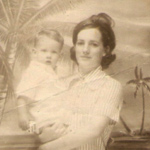
 The photo is my son and myself. Now days you can get a photo made to look old like this one. This photo was taken when this was the new look.
Harry S Truman was president when I was born and world war II had ended. I grew up in a time when lunch was put in a brown paper bag and a sandwich was wrapped with wax paper. There was no such thing as pantyhose, we wore stockings that attached to the rubbery clippy things that attached to the girdle. Convenience stores were not common and when we took a trip we packed a picnic basket because many places did not have fast food. Highways had places to pull over and stop, some with picnic tables. Read more ....
Comments On Article: We Don't Know What Will Happen
For the non-electric items Lehman's. I have an old 2010 catalog from them that has the single burner plus two or more regular sized kerosene stoves listed. Also, the oven for putting on top of the burners. It is advertised as "Non-Electric Catalog" and has lamps and lamp parts plus many, many other items that would be useful. The phone number for orders on the catalog is 1-877-438-5346 and website www.Lehmans.com.
Rebekah C - Your question on how mothers entering the workforce in WWII managed, my guess is many often had multi-generational living situations, and the grandmother would take care of the home/children while mom was working.
well, I have tried for years to build a very deep pantry including water. With health issues we have been thru since December that got a little off track so the past month since all this started I was topping up on supplies. Hubby for years has had a hobby of collecting Coleman lanterns and stoves and has decided to cut back on this so he will be fixing and selling some of those. Or who knows, it may be to help our neighbors one day. And this year we had already decided is our simplification year of getting rid of things we no longer need. And then, oh phoo, we decided we can no longer stick our heads in the sand about our yard. Like it or not we have to pay someone to fix our drainage and cut down a very large tree now to better our future as we age. That is going to hurt the savings….but praise God the money is there. And that set me to thinking. The folks in WWII, prewar, in all wars, the pioneers, the first settlers to our country, etc. etc. weren’t just dealing with the massive world events around them and in their country. I believe we fail to consider that at the same time they too had to continue to deal with their families health issues, chronic conditions, surprise repairs and just general normal life interruptions and complications. From historical diaries we can read that when they had instincts that something was about to go wrong the wise people started making preparations. Those folks pre WWII who were wise began putting aside foods quietly. In Europe they began talking as couples about what they would do if the husband had to go to war. Would the family stay in their home or take the chance of leaving early to live with family in what they thought would be safer circumstances, even knowing their home would likely be looted while they were gone? I can’t imagine how torn they were! When did they realize the need to create a hiding spot for valuables…in case….just in case…to protect what they have. I think one of the biggest things is learning to listen to the still small voice of God when he prompts you to do something, to buy something, that may not make a huge amount of sense at the time. Yet those simple things, or large, may be what goes a long way toward helping you out in the future. My gut says that sense my hubby and I both feel the need to have this large tree cut down now our neighborhood is going to encounter a really horrible wind this year. And just listening to the Lord’s prompting to stay home today, to take this route instead of that one, to be more aware takes practice.
Grandma Donna wrote, Just a suggestion when replying back to another comment, just type in the name when you start commenting. Such as Comment to Weaverbird, or comment to Ann and type your comment so this will save space in the forum and make it easier to read. I am just using your names Weaverbird and Ann just as an example, your lucky day. :)
Some forums limit the amount of words but I enjoy reading what you have to say as do others so I do not limit the words ( but do not write a book lol) .
So if I want to comment Stephanie, I just type Stephanie, I thought that was a wonderful idea and thank you for sharing it with us.
This should help to make it visually a better read. And by the way, these are wonderful comments full of information. We have a wonderful group of people here on the forum. Grandma Donna
We have used the water from the hot water heater tank when our power has been off and what I always do is turn off the power to the tank so that when the power comes back on the tank will be full of water. If it is not full, you will burn up an element.
Thank you CindyD W for pointing out about the hot water heater coils. (See post above this one) I hope that you do not get any damage or power outages from this new storm system coming through.
It looks like many of us here in the U.S. are having more of these 100 year weather events today and tomorrow and possibly into Tuesday. Ours here in Dothan is expected during our dark night time/early morning hours tonight, Sunday night/ Monday morning. I am getting exhausted from these tornado, large hail, flooding, and straight line wind events, especially during the time we should be sleeping. Zzzzzz.
sorry DONNA, I really did mean my comment as a general thing and not to a specific person, but I am learning. Smiling here. Another general comment as several have mentioned water storage. While camping my husband and I have found the gallon and two gallon jugs to be far better than storing up and hauling and using individual bottles. The five gallon jugs are just too unwieldy for us at our age. So interesting to hear the comments of everyone. And such great ideas. A fiction book, One Second After, is the most chillingly accurate depiction of what a grid down incident would be like. Things in there that I never would have thought of were deeply disturbing. Hopefully none of our countries will ever encounter a nation wide grid down scenario as in the book. If you do choose to read that book, do NOT read it in the evening….trust me on that. Even more disturbing was a book he wrote about something I think is very likely which is a terrorist attack on a school. If you are a terrorist and want to cause the most fear and turmoil what better target! Had a friend tell me once she didn’t think terrorists would ever attack small cities and towns, but again….if you are setting out to trigger fear I could certainly see that happening. I think the best we can do is what all have been discussing here you prep your own personal ark for the most reasonable scenario. And in that you will soon realize that ANYTHING you think ahead to do will take the edge off your nerves when uncertainty comes. And don’t keep the TV going all day. It will just jangle your nerves over things you can do nothing about and that likely will never come you way. Let me encourage everyone to have a few solar rechargeable lights on hand. Even in brief disruptions of power for things like storms these things give very comfortable soothing light, especially to calm nerves and small children. We got some that are collapsible so they take very little storage. With those you aren’t using up your valuable fuel.
Thank you Susan O, for this comment. I think that doing something about anything that is a risk is better so we do not have to worry and go on our normal day. It is good to know the possibilities, our ancestors lived more prepared because things were not available as they are today. They also knew how to get by with more simple things.
About the water, Charles and I cannot handle the five gallon buckets anymore, we found three gallon buckets at tractor supply so we got some of these. However we do keep some five gallon buckets stationary in special places and dip from those to other things. We do this when it freezes here because we have a short crawl space under our house and we had a water cut off valve installed here at the house to easily turn off and drain our pipes. We will use our stored water during these times and we have camping toilets.
Also storms seem to happen and we lose power at times. We do have a couple of rain barrels and also a 65 gallon water tank and a small 35 gallon water tank for city potable water. Those of us that have talked about our many water storage tanks and buckets may seem extreme to some people but we cannot live without water. It seems to be getting more common for outages, we have had water outages off and on for a day for line work. But now we have new threats that can also put us out of water for longer term.
I like the idea that was written by Ann W that said, when we empty the contents of a canning jar, after washing the jar, fill it with water and put it back on the shelf. Wonderful idea. Also water can be canned to keep it drinkable longer as CindyD W wrote. I will add when opening stored water to pour it back and forth in a jar or glass to aerate it for better taste.
Also, bleach does still have a purpose today and if you go to Clorox website it will tell you how to purify water. I normally discourage putting links into the forum but I went to the official clorox site so you can click this to learn how to purify water in a critical situation. https://www.clorox.com/learn/water-purification-ho...
Donna
Joyce C, it is very possible to have a hand pump with your electric well pump. A plumber installed mine. Hand pumps can be bought at some hardware or plumbing supply stores and online. He ran a pipe off of the electric pump itself, turned the pipe up with an elbow and installed the pitcher pump on the turned up section. The electric pump does not have to run or even electricity be available for the hand pump to draw water. I have blessed this hand pump multiple times in power outages and use it to rinse hands and tools frequently.
There is a difference between being prepared and being fearful. I am concerned that the tone here is changing, from being helpful and learning to fear mongering. Any of us can prepare for a storm. We routinely have ice storms or hurricanes, and lose power for a week. But none of us can prepare for a catastrophe, for Armageddon! Can we please return to sharing resources for skills or supplies, and sharing what we are doing. The future is always uncertain. It was in 1942, and is now. Glad to learn from gdonna, and all of you.
Joan S,
thank you for that info about the pump. I will definitely research this.
I just bought bleach last week, have been out for a while and kept forgetting.
Thank you Gr.Donna for the link.
I am loving all of these ideas and it makes me wonder if in 1942 people prepped before the war. It had to be harder then because we have more things available like solar. Its amazing how they figured things out with what they had available.
I have lamp oil on my list, I have plenty of wicks but need more oil. I love the glow from an oil lamp.
I read that you can use wood ash in place of lime in a pinch.... IF you had to go the outhouse route. I found that interesting.
I also look up directions for a leach barrel for making lye...so interesting,
I can't speak for others, but I think the seriousness of the threats that could engulf us requires us to think about things that would have seemed preposterous at other times. I got very frightened last April when certain economic policies caused me to realize that my household wasn't as financially prepared as I thought. Since then, we've gotten on more solid footing, often from the help of people commenting here. Like Tea S's idea about living off of the money you put away instead of your paycheck.
I feel much more secure now, but that scare got me paying attention to the forces on the economy. I spent this past weekend learning about historical economic breakdowns, and what helped and what didn't. Grandma Donna might be interested to know that in an economic breakdown the analysis shows that having things like a garden and the tools and skills to take care of yourself or barter with could be more valuable than owning gold! Growing a basket of vegetables could be more important because people can't eat gold, but they will trade you things for your vegetables. I guess all these analysts should have just asked Grandma Donna what to do! :)
Never before in my life would I have thought about how to survive an economic breakdown, but I don't think it's unreasonable to consider. Lots of people throughout history didn't prepare and got caught out by these events. Kimberly F thinking about drone attacks made me nod my head because she lives by LA, which is an obvious target if things should come to that. And while I don't agree with Lisa W that we have open borders, we have lax laws sometimes but we do have laws, terrorists could pose a threat due to the war we started.
These are frightening things to think about, but I think its better to be prepared than face the consequences of not being prepared.
I just want to thank GDonna and all of you wonderful ladies for your wisdom and inspiration to be my authentic self. I no longer want a cookie cutter house decorated by Hobby Lobby. I now embrace all my "hand me down" antiques and use them often, including my grandmother's kitchen canisters.
I don't see any of you as fear mongerers. I see you as concerned women who face reality head-on. I see you all as empowered women who take action. You are amazing problem solvers and share some fantastic advice!
I'm so grateful to have found this community. Keep inspiring, we all appreciate it!
Whether a pitcher pump will work or not actually depends on the depth of the static water level in your well. If it is less than 25 feet down, a pitcher pump can do the job. They are fairly cheap, simple to install, and can be added alongside an electric pump in most shallow modern wells.
However pitcher pumps will not lift water from a great depth. For that you need a deep well pump, which works quite differently and will not always fit in the same bore as an electric pump. They are also quite expensive. My own well is 120 feet deep with static water at 97 feet, so a pitcher pump is totally out of the question. At least the casement is big enough to fit a deep well hand pump, but when I looked into it about 15 years ago, the cost would have been over 12,000 dollars. I'm sure it's even higher today.
Sometimes I have to remind myself not to cross the line between responsible preparing, and over splurging on prepper toys due to reading too much post-apocalyptic fiction. In that case I grudgingly did the financially responsible thing and opted to expand other (nearly free) emergency water options instead. And in any scenario other than a permanent grid down situation happening in my lifetime, I will be glad of that decision. . .
If worst comes to worst I can always drink boiled creek water and try not to think about the fish poo.
I don't see this as scare/fear mongering, just as being sensible and preparing for shortages in the long term (or hopefully short term). We are having heavy fuel shortages here due to the unprecedented happenings in the Arabian countries which is sad as it has come to neighbouring countries being targeted when they have nothing to do with it, so sad and so unnecessary - and that is a flow on effect for tourism, and everything else combined. The main thing here is fuel, which in turn effects farming and then food supplies, and therefore supermarkets should you be reliant on those. If it gets really bad then the grid goes down so electric cars will be totally useless, and then we worry about water - but those are what if scenarios and we hope, having weathered these storms before, that it won't come to that.
I've lived long enough to have seen the worries of all the different situations including the Russian possible invasion on the coasts of the Americas - and we live to tell the tale. I'm in no way religious, but I do have faith - just concentrate on your own little area and know and hope that you are equipped for anything that life throws at you.
Sara D., when you consider 1942 you need to remember we were in WWII. People were anxious, working hard to survive, Victory gardens, women working in factories, many supplies unavailable. Also, dealing emotionally with loved ones in the military. It was not like today where soldiers overseas have facetime with family often. In 1942, they did not know where their loved ones were beyond Europe or Pacific. V-mail was postcard size and heavily censored and sometimes months went by without hearing from their soldier. There was no TV for daily reports from the front like during Vietnam. Newspapers, weekly news magazines, radio and newsreels at the movies were the sources of information.
When we are prepping in 2026, we are dealing more with rising prices and wanting to put our homes in the best place possible to manage through whatever comes our way. Job loss, illness, weather related disasters are common. With the new war and general unrest, it would be easy to develop an attitude of fear but that isn't what we are about here.
I've been a prepper for many years, so I already have a deep pantry. I'm old so I already have many of the household items that are being discussed and most are older than me. I have pressure canners, water-bath canner more jars than I'll ever use again, general canning equipment and supplies, gardening tools and supplies and the skills from many years of experience. I have sewing supplies including patterns, fabric, thread, buttons, zippers, scissors etc. and again the skills needed to make and repair clothing and household linens. I also have hardcopies of how-to books. I'd still like to have a new treadle sewing machine head from Janome but can't justify the expense ... since I'm old!! I believe that I've done all that I can in acquiring supplies and skills, so I don't give it much thought anymore beyond maintaining what I have.
Bottom line, as Sara D. said, we cannot prepare for everything so we do the best we can and leave the rest to the Lord.
I don't think any messages in this forum have been (intentionally) fear-mongering. We're just being realistic (based on history) about the possible challenges in our future.
The way I deal with anxiety and my existing PTSD symptoms is to either clean, garden, or work on planning/building my prepping skills and supplies. It helps me feel more in control of my life circumstances, by firstly giving me a task to focus on, and secondly, helps to prevent more causes for anxiety in the future, so calms my brain down and quells the overwhelm.
PS - my boss has just approved me working the hours that works in with the bus service to the next town where I work! Starting Wednesday, I'll be working 45mins longer each day and getting a day off each fortnight in lieu. I'm so very thankful, as this will cut my travel costs substantially due to the cost of fuel here in Australia. Just in time as apparently our Reserve Bank is about to announce another mortgage interest rate rise. Yay!
I live in Florida where virtually all wells are shallow, but yes, I should have mentioned the depth factor. My grandfather had a pitcher pump at his farm in the upper south, as did all my great-grandparents so it is possible elsewhere to have shallow wells. A reputable plumber should be able to help if the homeowner is unsure of the water level.
Thanks for bringing it up
To everyone here, I want everyone to comment as they want in this forum other than politics and I thank you for abiding that. I wanted to hold back before I commented about the fear mongering comment and let many of you comment, and everyone commented so very respectful. Thank you!
My purpose here is to give everyone a place to gather and communicate respectfully to each other and this is how it goes here in this forum. I feel that no one here that has commented is fear mongering. I was troubled to even write this post last week wondering if someone would say something like this but I know that people are going through some very difficult situations right now and so many have lost their jobs and there is much uncertainty. I pray before I do a post ask God to use me as a tool to help someone. We also forgive in this forum, we have had a few touchy things at times and so far we have always gotten passed it with the sensibility and kindness we have here.
I felt it is time to write this post because we are all here to learn from each other. I do not want anyone to be afraid to say what they feel and if anyone was or is fearful, this is the place to come to so we can help those that are to work through it and give ideas of what to do. We are a group of people that are learning to understand what our ancestors did to get through difficult times and we are having difficult times now. We are also learning what the home front looked like during ww2. How do we adjust when things change? We also have some very experienced people here which makes it even better.
The people in this forum are from all over the world, actually many from around the world not just the United States and we all have our situations. Some countries are having different issues than we are here where I live in the U.S. We are here to learn new things and I believe we have been doing that. We have people here that are at war now that come to this blog. When people come together from all over we bring in so much more to our learning skills and there is not even a school to learn as we do here.
I agree 100% with what Ann W, Stephanie, Rebekah C and the others and yes, we are being realistic about the possible challenges in our future. I have experienced things in my lifetime that I wish I had the knowledge I have now back then because it sure would have made things easier.
Another mention is that when we hear about these large water storage tanks of a couple thousand gallons we must consider the location of these tanks, what country they are living in, this is very normal to have these cisterns and large tanks and need to have that much water. There is a reason. An open mind can learn wonders and that is what we have here in this forum.
Please do not worry about asking for suggestions or to share concerns or share something you want to share. Some of the most simple things have surprised me and made me think, "why did I not think about this?. Hugs to everyone, Grandma Donna
Since the topic of the seriousness of things has come up, I am going to share something I wasn't going to mention for a few months. My husband is changing his job. Last April showed us the cracks in the industry he works for, and now AI is coming. He is going to look for something steadier. It will pay less, a lot less. Thats why we are taking this year to do some home improvements and put away as much money as possible. It's why we took our money out of the stock market. We didn't want a drop right before he quit. We are looking at living on an income half of what he makes now. Half is better than none, and we know other people trying to plan for AI taking their jobs. We decided that it was better to act sooner than later. And that's why I was looking at historical economic breakdowns. I am trying to plan for a simple but very secure life. :)
- GDonna, thank you for your kind message. None of my friends or family members are interested in learning about homemaking from days gone by. None of them are doing anything to prepare for hard times. This community is a creative outlet for me. It calms my anxiety and empowers me to have more confidence in how I'm navigating home life. Some of your ideas have inspired long lasting changes in my everyday life.
- Ignoring what is going on in the world and pretending nothing bad can happen is irresponsible. None of us our running around like chicken little, for goodness sake! Most of us were taught to love thy neighbor. In a way, that's exactly what we're doing here.
Stephanie G, I understand how you feel about your husband's job and wish you all the best. My husband sells software for the Navy. The government shutdown and the war have made his job so difficult. Commission checks seem to be a thing of the past. Luckily, his paycheck remains steady for now. But, he could lose his job if the war continues.
This doesn't necessarily scare me, but it does motivate me to scale down my spending and keep saving as much as possible. But, saving is quite a challenge these days! With two teenagers, money doesn't go very far.
Joan S in Florida mentioned the solar panels. We have solar panels on our roof, they were installed in the 1970's, years before we moved into this house. They aren't pretty, and I wanted to have them removed, but we were afraid that doing that would open a can of worms and we may have to do roof repairs. We just left them, and now we are glad we did. Of course, they do need electricity to run, but we use them and they run fine. They are an excellent substitute for our gas heat in the winter, but not perfect. We let them run on sunny, cold days and really heat up the house, then when the sun goes down, house slowly cools down, at night we use our regular method of heat, a gas furnace. A big drawback we discovered was if they were covered with snow, then no solar heat. One winter my husband climbed near them and swept the snow off, but that is too dangerous at his age now. We just use them when conditions are optimal (sunny, cold, no snow) and are thankful for them. I know this is probably not much helpful information for Joan, sorry. Today is sunny, snow on the ground, and about 20 degrees out---the solar is blasting!
Stephanie G, I understand your husband looking for a new line of work, and wish him quick success when the time comes! Our gross retirement income is 25% of our gross pre-retirement income, although a lot of the pre-retirement income was being saved in retirement accounts and general savings. We had excellent medical insurance coverage without paying a premium. Now that my husband retired, that same insurance costs 22% of our gross retirement income (and we still have the copays, deductibles, and coinsurance costs)! We are hoping that things will be different in the future in terms of what we feel comfortable spending each year, once we can draw Social Security (at whatever reduced benefits may be put in place).
It has been a huge shift. We had gotten to a place where we didn’t really think about if we needed to buy something or eat a meal out, because we didn’t do it a the time and we were pretty mindful of our spending. But now we really have to stop and think. Some of the projects we thought we would do have now moved into the unlikely category, such as xeriscaping the front yard. Some kitchen tools I might have wanted I will do without. And truthfully? I love the requirement to be flexible and creative in my thinking as I do without. I love figuring out how not to buy something
I hope my previous post wasn’t considered fear-mongering! One thing I am seeing is that these preps that we write about have many applications. I wrote about needing window coverings in case of aerial attack. I hate to think we might have those kinds of attacks, but I still think I need to prepare. I’ve avoided putting up thick window coverings because I love how my uncovered windows look, but thick window coverings will also help with heating and cooling expenses. Thinking about this recently helped me see it doesn't have to be an all or nothing situation, I can put up rods with Command hooks and take them down if I don’t need them. Being prepared with water storage helps in many kinds of emergencies, including earthquakes. Keeping a deep pantry not only protects in case of natural disasters but also job loss and rising food prices. Thinking about where we might shelter away from windows is good for anyone who might face tornadoes, hurricanes, etc. Our area does get the occasional tornado and a few years ago we had significance storms from the remnants of Hurricane Hilary.
I have been reading about expected food price increases (but this fall) due to the fertilizer shortage we are already beginning to experience with oil and gas not being able to move freely. Liquified natural gas is part of what isn’t being shipped, and it is used to make fertilizer. Already American farmers are facing shortage and higher prices. I never thought of this when the war first started, I only thought of people needing gas for cars! But of course, it affects so many things, including heat for many people.
I keep thinking I don’t have a lot of room in the house to store more food, but this morning I realized that the renovations we did to the garage bonus room a few years ago makes it a good place to store some food buckets and canned goods! Not our first tier items, but duplicates. Before this room wasn’t well protected from pests, but it is now.
Joan S, I love my solar electric system! I haven’t had it long enough to answer all of your questions, but I can answer some, and perhaps explain why we made the choices we did.
Putting in a solar electric system that could theoretically meet 100% of our electricity needs was a goal for over a decade, but we needed several things to be in place. We started saving for the solar after we paid off our mortgage (paying it off early and having no mortgage when we retired were more goals we had). We knew that to get the tax credit we would have to install the system in a year my husband worked the whole year.
We chose our system with the idea that we would rarely if ever have to pull from the grid for electricity, in part because we want our electric bill to be as low as possible in retirement and in part because we wanted to be able to meet our needs in case of a grid failure due to natural disaster. We did choose storage batteries, which were about half the cost of our system. They have a 10 year warranty to hold a certain percentage of charge. After that they might hold less but will still work. They will be the most expensive part of the system to replace, for sure, so we have to save for that. My husband thinks battery prices will come down if more people are getting them. We sized our batteries at 40 kWh, and after the fact I wish we had done one more battery when the credit was still available. One thing we learned is that during several events per year we can earn money by joining the Virtual Power Plant — our friends earned $1000 in 2024. This is different than what the electric company pays when we produce more than we need, it is electricity sent from our batteries to the grid in extreme situations. Some people also do things like charge the batteries from the grid overnight and sell it back when the company needs it most (late afternoons and evenings), making a profit that way.
I too was concerned about solar panel production and what happens after the 25 year warranty, but my husband did a lot of research and said they will continue to produce after that — there is good data now that so many people have residential solar.
Our roof is 14 years old and I was worried about putting the panels on now and then having to redo it when the roof needs replacing. I guess we did a 35 year roof and my husband really doesn’t think we should be concerned. Panels on a stand alone structure can be good, but you have to either have a lot of land so the sun can shine on them without obstruction from trees or buildings, or build a tall structure, which is hard to get approved. Our church is looking into building structures for solar over the parking lot, so they will hold the panels and provide sun and rain shelter when people park. Unfortunately, it looks like the structure will cost at least as much as the estimate of the solar electric system. The other option is to do all of the roofing that needs to be done, and put the panels on the roofs of the various buildings, but that is also an expensive job and the way the solar fund has been designated we might not be able to use the funds for the roofing.
You are so correct that we have all been inundated with calls and mail for solar companies for decades now! I especially don’t trust solar leasing, and they are the most aggressive. What we did was go with a company that was adding some panels for our neighbor. We got several other quotes, and this company was still the lowest, along with having the recommendation of our neighbors. Since then he has added to two more systems on our street, installed a full system for our neighbors, and did a full system for a friend. I think word of mouth is the best way to go, and after that, a well established local company.
We need to clean our panels now. Somehow my husband thought once a year but I did the research and for our area it is 4 times per year, so we’ll clean them soon. I think it would be best for us to create a schedule and perhaps clean part of them each month, rotating through. Eventually we may get to frail to clean them ourselves, but we do have an adult son living with us. You are right, though the cost of cleaning might be a consideration for some people.
I was working in the basement this afternoon to plant my tomato seeds and then sorting seed packets to determine what I need to purchase. I also threw away numerous old seeds.
While I was downstairs, I noticed a prep that has come in handy for me more than once ... plastic dishpans. I have many and they stack so they don't take up room. We are not supposed to use city water to water outside, so I do dishes in dish pans and then carry the water to the garden. They can be used for handwashing clothing, for washing hands and for sponge baths. I use them to place pattern, cutout fabric, thread and findings to keep everything together for a single project. I use them in the bottom of the cupboards to store items and can easily pull the dishpan out rather than leaning over or getting or my knees to reach something at the back. I use them when picking in the garden because I can scoot them along the row without them tipping over. A big plus is they are readily available and cheap.
For those new to stocking up, buckets with tight lids are a good choice and can usually be found at bakeries and delis for a low price or free. The buckets are obviously food grade. I also use the older popcorn tins that show up in stores around Christmas and then at garage sales in the summer. Both are rodent proof especially the tins. A rodent could potentially chew through the plastic, but most people check their pantry enough that will never happen. My pantry is in the basement with open shelving, so the Christmas tins brighten things up. For the buckets I paint a rectangle of blackboard paint on the side of the bucket and use chalk to write the contents. For tins, I use a strip of paper to write the contents and hold it in place with the lid. I leave most items in original store packaging inside the containers.
Kimberly F I love your comment about loving how to figure out not to buy something. :) I almost wish we were on the reduced salary already so I would have fewer choices and decisions.
Melissa S thank you, and good luck with your husband's job. I hope he doesn't lose it! I'm not sure people understand how much employment disruption is just around the corner. The people we know who are expecting to lose their jobs to AI are very highly paid. I think people's expectations about how much they can make is going to change.
To everyone does anyone have an opinion on Lehman's clothes washing plunger? I bought a 20 gallon metal trash can (and it was painted a pretty pastel green!) for clothes washing, but now I'm looking for a plunger. When we're on the reduced salary, my plan to cover any unexpected expenses during the month is to save money by doing things the old-fashioned way, including clothes washing. :) All of these small things really add up!
With all of the talk about being prepared, I wanted to share what happened to me yesterday. We were having a hailstorm and were under a tornado watch. Just as I pulled my car into the garage ( which is about 60 feet from the house), the tornado siren went off. I didn't have a go bag in the car or the garage, so I ran to my root cellar (which is also my storm shelter) empty-handed and with no light. It made me see that I need bags and supplies in more than one place. Since my root cellar doesn't have electricity, it was rather dark, and it was hard to see what supplies I have down there.
It also got me thinking about some of the storms I have seen on the news recently. Many have had their houses literally flattened. It made me think about what I would do if that happened to me. I don't have insurance on my house because the cost is very prohibitive. The last time I checked, it was about $200 a month. To me, that would be like having a mortgage on a house that's been paid off since the day I bought it. Since I live on about $750 monthly, that would be a huge expense for me. While in the root cellar, I started pondering the houses people lived in in bygone eras. I thought about the dugouts that people lived in. My root cellar is 7 1/2 feet wide by 11 feet long. ChatGPT said that it is about the size of a dugout that a single person would have had. My root cellar really needs fixing up, so I am thinking about how I could make it more habitable in case anything ever happens to my house. If I could get electricity down there, that would be a huge improvement. I also thought that if I got it fixed up, I might sleep down there in the summer. Sometimes it is so hot at night since I haven't used AC at all for years, so it might be nice to sleep down there.
I really appreciate all the realistic, practical comments here. I don't see it as fear-mongering, especially since we are from all over the world and we are in a variety of circumstances. I have noticed that many people (not on here, people in general) seem to think there is something almost sacred or special about the U.S., like nothing really horrible could ever happen here. However, the Great Depression and other hardships have occurred here, and bad things will happen again.
I am on a huge decluttering campaign right now, but I am also storing things in totes that might be useful in the future. Instead of getting rid of usable bedding, clothes, towels, dishes, etc. I am storing them. You never know what you might need in the future. I read in a book about something that happened in the U.K. during WWII. There was a big campaign urging people to give up every metal item they could for the war effort, including pots and pans. A few years later, you couldn't just go out and buy new pans whenever you wanted. Everything was very scarce, and some women deeply regretted having given away such things. I don't want to have any regrets about what I donate to a thrift store.
Kimberly, you wrote about the possibility of drones spying on you through your windows. I have used EZ Blackout Shades for years. They work very well. They give 100% blackout. People overseas during WWII would have loved them because they are so easy to put up and use. I have had mine for probably about 8 years, and I am very satisfied with them.
Everyone Have A Great Day!
Becky Sue
Becky Sue K. -- We lost our home to a tornado in 1979 and, yes, we were in the basement at the time. In the new (well new in 1979) house I have a tornado safety area, and it is kept stocked. Battery lights and battery radios with extra batteries, bottled water, camp cot, sleeping bags, tent, leather gloves, suitcase with change of clothes, towels & wash cloths, wipes, tissues, toilet paper, the box of toiletries I use when I travel and crowbar are kept there. A small safe with cash and important papers and shelves with space to place things I have on a list to take down.
Yes, I keep a list of what I want/need to take down which I gather when we get a watch and stage at the top of the stairs so I can quickly move them down if it goes to a warning. Just looking at my list I realize I should organize it by room because what I take down is scattered throughout the house.
I'm counting on not getting hit by a tornado twice in the same place, but I still prepare!!
I've lived in places with caves, some nice, some pretty bad. If yours is a decent one you might be able to whitewash the inside which will make it lighter/cleaner, custom a shelf unit to store your supplies (never store on the floor) and a chair to sit on when you have to be down there. Maybe cover the center of the floor with the snap-together tiles meant for garages or basements.
My safety area is too small to set up the camp cot, but if the house was gone, I'd have a tent and bed.
This week we have been doing some things that make us a little more prepared. Although I do find it a bit unsettling to know that there is only so much we can do now to prepare with Jacob now. I used to look into thinks like go bags but I'm not so sure how feasible go bags are for our family now. All of Jacobs medical equipment will be at home! We can certainly cook simply for us but what happens if we can't get Jacobs formula? As it is, I am able to supply some of his milk but not all of it. These are sort of scary questions right now. If the grid went down with Jacob, I don't know what we would do in some cases.
In other cases, we are a bit more prepared now. With this years tax return (thank God it was a really good one because we needed it all to get the house ready for Jacob) we bought a generator. This is something I've been wanting for a while but we could not financially justify it for us. But for Jacob? Yes, it is a need now. We have to maintain power for his equipment. We also got more fuel tanks to store fuel for it. We also ordered a portable sink for Jacobs room. It funs off of Five gallons of water and you can drain that water into a jug to be used for flushing toilets after hand washing is complete. We ordered a gym mat for his physical therapy and occupational therapy. Instead of going with something cute, we went with something very practical that can be wiped down, folded up, and stored to make keeping our floor space clutter free and easy to clean. We are now looking to stock his room with a lot of things I would not usually buy...Lysol wipes, purell bottles, diapers, baby wipes, gloves.... These are things I usually don't use. I usually simply stick to plain old soap. But with nurses coming to the house here in the future, we need to be sure they are stocked with what they need. Our neighbors are giving us a mini fridge for his room to contain his refrigeratorated med and for the nurses to use for their food. We also have a spare microwave someone gave us to put on top of the fridge for the nurses to heat their meals in his room. We also have an extra coffee pot for the nurses to have hot drinks at night to stay awake. We ordered a bed side table for them to side or stand at and stay busy so they won't fall asleep (hopefully).
I am rethinking not doing baby chicks this year. My husband wants to attempt a garden. I am usually all on board with that but I am also not sure how I'm going to get much time out in it myself to help! But I am rethinking the priority of it this year after reading this post. Maybe I can find the time. We can do what we can do to prepare. The rest we must lean on God for because I simply don't know what we would do in some circumstances. God help us if it comes to all that because we certainly would need it!
Becky Sue K, we also had a tornado warning here in MD. I was scared to the point of shaking. I was bed side in the hospital with Jacob when all the phones went off saying to seek shelter. Our bed is next to a window. I could not simply unplug him and take him to an interior part of the building! This has me very anxious especially when I was diligently watching the window and the power in the parking lot went out. The hospital lights didn't even flicker due to their generator but the power out in the parking lot had me thinking the tornado was coming. I started unhooking everything I could from Jacob (besides his ventilator)...I even put his Ambu bag (a bag to manually force air into his lungs) on the bed with him in case we had to bag him in the hallway. I got ready to roll him out to the hallway at any warning sign. I watched as my hands shook, waiting for that warning to be over. That was so scary! I could easily get myself to very solid shelter in the interior of the building but I was not leaving my Jacob!
I have also noticed how people seem to have a stronger sense of security here in the states. It concerns me. Unfortunately, we are not invincible and I do hope it never comes to everyone finding that out (though I suspect some day it will unfortunately). I too have black out curtains on just about every window we have but it's mostly for energy conservation to reduce the power bill (which we are very much going to need with all this extra medical equipment!).
Quick comment.
On our news NZ it said farmers and growers are saying vegetable/fruit will skyrocket as Urea won't be able to get to us with the war and will add additional costs to production not to use it.
Hmmmm I thought. I grow seedlings. I plant them in my garden that does not have urea added. They grow. I feel people need to think logically/sensibly. Our ancestors didn't use Urea. They used natural manures.
Stephanie G,
I don't know about the clothes plunger from Lehmans but.....when I was first married long ago in the late 1970's, we were so broke...LOL we lived in a rental house and there was no money for doing laundry....I mean none. The bathroom was upstairs and I would do laundry in the bathtub with a very short handled plunger (new) It worked really well. Husband worked in a factory and got dirty but I was able to get his clothes clean by agitating them/plunging with it. I would start with hot water and do the household stuff, light/whites and then drain them in the sink, then do the dark/dirty stuff in the cooling water. When it was time to rinse I just reversed the clothes, rinse the lights, and then the darks. While the darks were draining I would take the whites down 2 flights of stairs to the basement in cold or bad weather and to outdoor lines in good weather. Did the same with the darks. The trick was to not let the loads get too big/heavy. It was hard but we were young and broke so we did what we had to do.
We were bound and determined to just do what we had to do without help. Foolish/proud but we survived. While I don't miss the "broke" part, I am glad we went thru it because we learned so much and what we could do and get thru if we had to.
My mom told me later that she was upset that we didn't bring our laundry to their house but was also secretly proud that we figured it out.
I have a small new plunger now and a bucket to use if needed. Since it is just me laundry is much lighter.
Kieva A, that does sound very frightening when you had a tornado warning at the hospital. I would hope that the nurses and staff had trained for such a situation and would be ready to help — there should be a poster of instructions on the wall! Preparing does sound much more difficult for you. In my go bag I have some extra medications that can help get me through if there is an emergency and I can’t take my regular medication. I have the prednisone protocol and taper if it comes to that. There is no extra pain medication, however, because it is prescribed so carefully now.
Joyce C, when we were newly married our apartment complex had a laundry room that required quarters, and doing laundry was a hardship. I didn’t grow up with any example of doing laundry other than with a washing machine and dryer. My husband grew up with both a clothes dryer and a clothesline, but we couldn’t put up a clothesline or afford a drying rack (it’s one of those things, easier to come up with $2 in coins each week than $20 for a small rack). After a year we moved into an apartment with space for a washer and dryer and my parents bought us a super cheap used washing machine and my dad scavenged and repaired a dryer for us. That’s the funny thing about my parents, they were great at being frugal in some areas, but not in others. Then my mother-in-law switched the avocado green washing machine for her newer machine when she rented her house out.
Stephanie G, we intentionally lived on the lower budget for 5 months before retirement, and even before that we were living on a lot less than the full income so we could be savings. It was helpful, but not exactly the same. When there is still income coming in, it feels less painful to go into savings for something.
In the United States, I feel this pull between people thinking technology is going to save everything and push us into even more modern living, and people who think we are going to go backwards. I wanted to start growing food this year, but my health has been on a downward spiral and even now I am having terrible side effects with my new medication, to where I can hardly get out of bed. My doctor wants me to push through for another 6 weeks and see how I feel after the loading dose finishes. So I don’t have the energy to prepare and plant a garden. My city recently approved backyard hens, and my lot is just big enough to allows 9 hens, but that will also have to wait. Still, it is all part of the plan. Even in the front yard, eventually I want to fence it (at the allowed height) and put in raised beds. There is a small side bed that isn’t very big and doesn’t get enough sun on part of it that I plan to put down bricks and have herbs in containers, so I can move them with the sun throughout the year. After paying close attention to the produce we eat throughout the year, how much the produce costs, and our ability (or rather inability) to store produce over the winter, I’ve decided we should grow tomatoes, lettuce (during the months that aren’t as hot), bell peppers, zucchini, plus spinach and other greens. We use a lot of onions and garlic but storing them would be hard, plus they are inexpensive. Same with celery, I buy it once a year in November when it is super cheap and then chop it all and freezer it. We should replace the orange tree we had to remove out, and plant an avocado tree (neighbors also have one, so we should be able to get by with just one). Another citrus tree would be a good idea, perhaps a Eureka lemon or a tangerine tree. Or we could do a plum tree
I forgot to write that we are also in a good place to grow strawberries and boysenberries (or blackberries, we just prefer boysenberries).
When I had my first child, I often did not have money for laundromat, so I washed diapers in an old, galvanized wash tub in the middle of the kitchen floor. When I was thinking about alternative ways to wash should it become necessary, I purchased a double rinse tub that was formerly used with wringer washers. I figured if I was washing by hand, I wanted to be on my feet not my knees. That tub has never been used and hopefully I will never need to use it, but it remains in the basement just in case.
Joyce C I thought about the bathtub but decided that if money was tight, I could heat some rain barrel water on my grill with free wood from my wood pile, use that to wash my clothes outside, then dry them on the line, and the only expense I would have was the laundry soap. The bathtub is a good idea for rain or winter. :)
you know, one thing that may help folks when they start feeling fear is to count what you have and what you know already. And in doing that realize you are better off than the vast majority of folks in the US who the government has estimated only have a 3 day supply of food in their homes. How can they sleep at night? And another thing that can put all of us a gigantic step ahead is just the realization that you don’t have to have all the stuff so many are sure are essential to their lives. (Ah ha! For grid down we need some books on hand. This has just occurred to me. My husband and I always have a big laugh at the ad on TV telling people they need half a million dollars in the bank to retire. Dang people…..when you retire you don’t want to own a stupid horse farm, sail around the world, or any of that nonsense. I think most of us start learning we like being home and left alone.
KievaA. You did a great job thinking of what you would need if you had to shelter in the hall. You are doing good. Look at this as a learning experience. The only thing I can think you might do is ask the nurses what they would suggest.
Then you could save the wood ashes to make ash water for your next load, in place of soap, and have totally free laundry :)
Has anyone noticed food shortages? We noticed that a couple of products we purchased regularly had been out of stock for months. The stores finally stopped trying to get them in and removed the labels.
I was looking on Vitacost, which is where we can order many organic foods for a reasonable cost. Every category, today, had a notice that products were temporarily unavailable; many, many products. It surprised me. I was just wondering if this is just a fluke or if anyone has noticed their stores having issues getting products?
Glenda, I have noticed, too, that the shelves are more bare than usual. I shop at a salvage grocery store, and the shelves aren't nearly as full as they usually are. Some of the produce prices are crazy, too. Cauliflower is about $6, and I think celery was about $4. I usually buy Red Delicious apples in a 3 pound bag but I have not been able to get them for several days.
Thank you, Becky Sue K. It helps to know it is happening elsewhere, also. I found it strange as I have never had a problem with a shortage at Vitacost. Apparently, something is the cause of the inability to get food in stock. I am very thankful for all of the information shared here on the forum.
I am in a major metropolitan area of the USA and have not have any experiences of grocery shortages as of this past Saturday.
Shortages seem to be random, one thing missing today, but there tomorrow. Something different missing tomorrow, etc.
However, I am noticing shrinking shelf space for many categories. At Aldi for example, they now have in two aisles what previously was four. Walmart has many categories where shelf space has been reduced. One example at both Walmart and Aldi is canned fruit shelf space much reduced and at Walmart occasionally empty spots. I don't shop at HyVee or Fareway enough to notice changes.
I appreciate the input Becky Sue K., Margaret p and Ann w. Many people don't notice if the amounts have been cut down when they consolidate shelves in order to make them look full. I have noticed that some grocery sales are a very tiny amount off or the amount that is listed as a sale price is the same as full price a month ago.
I am very concerned for people being able to afford items going forward, if things keep going up. I pray for our nation.
Glenda H_2 ... a lot of what we are talking about here is how to reduce our expenses for food and other items by looking at how people lived in 1942. Today people have a much broader diet that 1942 and by changing our diets to simpler meals of 1942 we can reduce today's bills. Even through the early 1950s menus were simpler although fewer people were growing and producing their own foods.
Having lived a frugal life all my life out of necessity it is easier for me to continue to live a simple lifestyle. For younger people who have never had to do without, I think it is extremely difficult as they feel they are being punished. I try to keep a positive attitude and consider living frugally a challenge.
I don't believe I've seen any mention of The Tightwad Gazette by Amy Dacyczyn. The tightwad tips and ideas that get you thinking outside the box are still valid today. One example that stuck with me was she picked up a ratty worn-out pair of shoes from a free box at a garage sale because the shoes had like new shoestrings. Originally, she had a newsletter which later got published in a book and finally two more books. The first book was 1993. You might still find them used online or in your local library. I haven't re-read them for several years and think it's time to do so again.
In these hard times, I am enjoying the book "Thrifty Tips From The War Years" by Janice Anderson. If you don't want to buy it you can read it for free at archive dot org. It has a lot of valuable information, even in our modern era, such as how to save money on fuel and by gardening, cooking at home, doing DIY projects, mending, budgeting, and taking care of things. It has some cheap recipes too. It has a chapter about making a home in wartime. There are many other books you can read for free at archive dot org. They have many interesting wartime cookbooks and audiobooks, too.
I first learned of The Tightwad Gazette by Amy Dacyczyn in the early 1990s. I checked out the books from the library. Only 10 years ago I bought the single volume that had all 3 books. I was at the tail end of child raising yet I gleaned useful tips. Even if some of the stuff is outdated or not useful for me I take inspiration from the book. It really helps set your mind on being frugal and seeing opportunities every where.
I've also picked up at used book sales various books on saving money by doing things yourself. A lot were written in the 1970s.
There are contemporary books from the library I've used that give recipes for household items. My favorite are the ones that have recipes for stocking your pantry with your own homemade mixes, condiments, dry soups, spice combinations, etc.
I've found cookbooks with recipes for alternative diets especially helpful. The vegan ones I've used had recipes that were helpful when I'm looking for meatless & no cheese dishes. Cutting out meat & cheese from my grocery list some weeks saves me a lot. Often I can make a "vegan" condiment with ingredients I have on hand. If there's an ingredient you're trying to not buy or avoid these kind of cookbooks are helpful. Not every recipe is great but I've found helpful ones.
| « Previous Page | 1 |

Loading more pages
NEW! Join the mailing list to get email notifications when new articles are posted to our site.
Thank you for joining!
IMPORTANT!
You were sent an email to confirm your subscription to our mailing list.
Please click the link in that email to confirm or you won't be added.
If you have not received the email within a few minutes please check your spam folder.